

Eight ingredients, plus pantry staples. That's all it takes to make an entire meal from scratch. Add in a good bottle of wine for less than $20, and you've got a feast for family or friends. That's the philosophy behind our "8 & $20" feature. We hope it adds pleasure to your table.
It's a rare occasion that I decide a certain food or category of food is incompatible with wine.
Take fiery Isan Thai food, for example. I've tried many times to pair sweet German Rieslings or aromatic Alsatian Gewürztraminers with bites of chile-packed pork larb and lip-puckering green papaya salad. But without fail, I always end up with numb taste buds and an empty bottle of wine that I've barely been able to enjoy. Give me a beer or a Thai iced tea; I'll save the wine for an easier match.
I've come close to surrendering to other tricky foods. Eggs with anything other than sparkling wine? Forget about it. Asparagus and wine just makes me sad (but others have made it work!). Recently, while buying ingredients for a soy sauce–laden dish, I almost reached for a beer, avoiding this difficult wine pairing. But when my dining companion teased, "I thought you were the wine aficionado," I accepted the challenge.
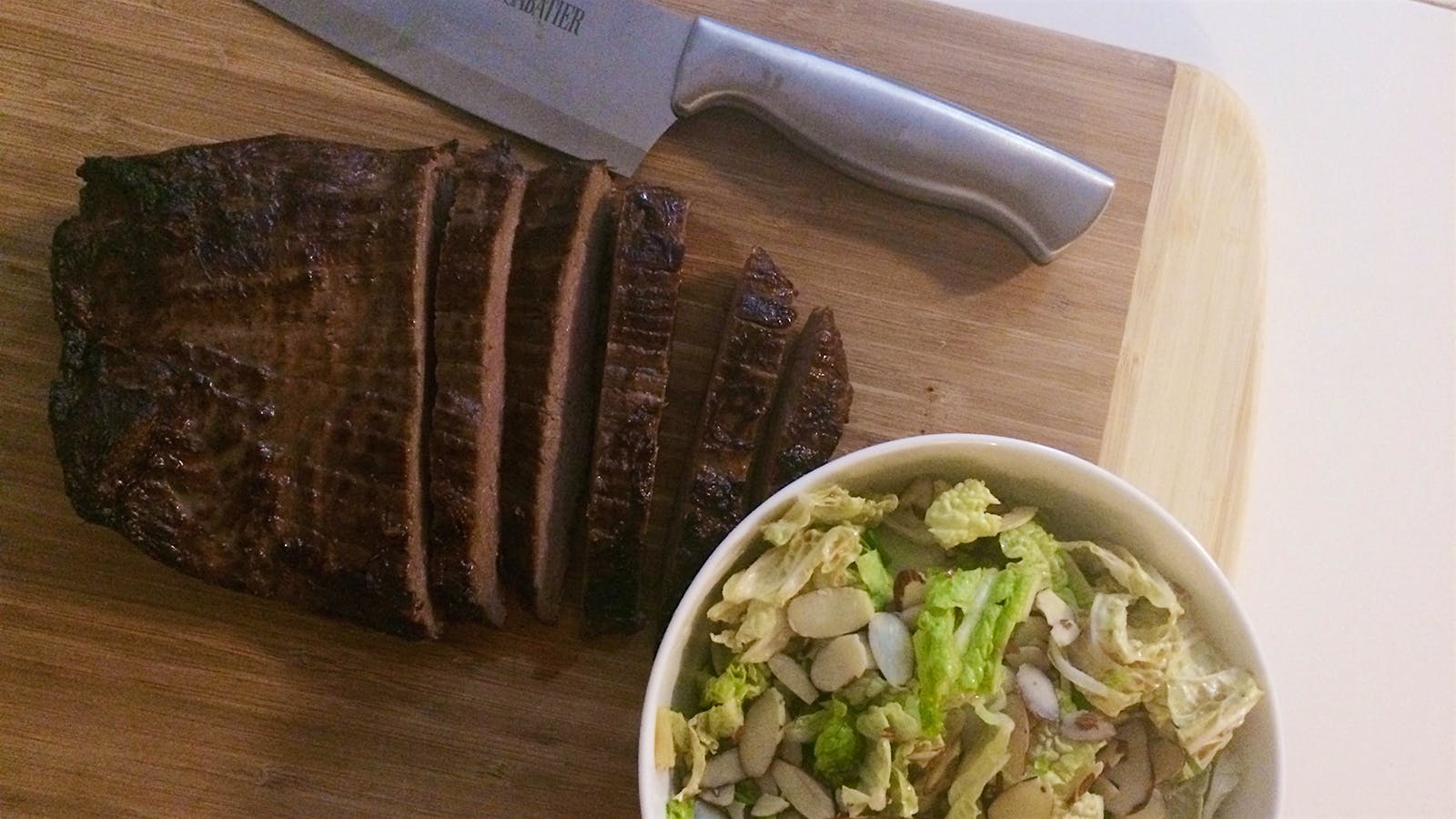
The dish in question was an Asian-inspired flank steak, one of my favorite weeknight meals. I save richer, more luxurious filets and rib-eyes for weekends and special occasions, but the flank is a leaner cut of beef, perfect for a mid-week indulgence.
Because it lacks fat and richness, I always marinate flank steak for as long as possible. Thirty minutes will certainly add flavor, but a full 24 hours will soften and tenderize the meat as well. I concocted my soy sauce–based marinade the night before the meal, adding in some scallions and ginger to play up the Asian flavor profile. I also added a splash of one of the red wines that I planned to drink with the dish, hoping that it would build a flavor bridge during my pairing attempt.
When I was ready to prepare dinner the following evening, I simply removed the meat from the marinade and popped it in the broiler. After it had cooked through, I let it rest for 10 minutes to retain its natural juices and carved it thinly against the grain.
To accompany the steak, I continued my theme with a Napa cabbage salad. A childhood favorite, the salad is a simple mix of shredded cabbage, scallions and slivered almonds, topped with a soy sauce dressing. It provided a crunchy, fresh contrast to the smoky meat.
Once the dish was prepared, I realized I had even more pairing criteria to consider than just the soy sauce itself. For starters, I'd usually gravitate toward a white wine with a soy-based chicken, vegetable or seafood dish, but with steak I craved something red. I wanted a wine with notes of earth and umami and sighed at the thought of an aged red Burgundy. But for a random Wednesday night, it was not in the cards. Instead, I looked to three reds low in tannins and high in acidity. Salt, found in high amounts in soy sauce, can exaggerate tannins and turn them astringent and harsh. I hoped these wines with rounder, silkier tannins wouldn't clash with the salty soy sauce, but would still complement the rich steak.
I first reached for the wine I'd used in the marinade, a southern Italian red made from Negroamaro, a local grape from Puglia known for its juicy acidity. It leaned more toward a riper or even dried-fruit profile, and its robust flavors clashed with the bold soy sauce and ginger of the marinade.
Next, I tried a wildcard that had been recommended by a friend: a Pinot Noir from Corsica. The wine had silky tannins and smoky flavors, which tasted wonderful with the steak, but the match with the cabbage salad left more to be desired.
I had high hopes for my final wine, a Chinon, made from Cabernet Franc in the Loire Valley. The wine had the lively acidity and the savory, earthy notes that I'd been seeking. With the steak, the tannins softened without turning bitter. Herbaceous notes of green olive complemented the fresh flavors of the cabbage and green onions. The wine was a worthy and victorious counterpoint to my challenging soy-sauced meal.
Asian Flank Steak and Napa Cabbage Salad
Pair with a savory Loire Valley Cabernet Franc, such as Domaine Gouron Chinon 2013 (88 points, $17)
Total Prep and Cook Time: 35 minutes
Marinating time: 30 minutes to 24 hours
Prep time: 15 minutes
Cook time: 20 minutes
Approximate food cost: $30
- 1/2 cup soy sauce, plus 3 tablespoons
- 1/4 cup red wine
- 1/4 cup plus 2 tablespoons neutral oil, like canola
- 1 tablespoon Dijon mustard
- 1 bunch green onions, chopped
- 2 garlic cloves, minced
- 1 tablespoon plus 1/8 teaspoon minced ginger
- 1 flank steak, approximately 1 pound
- 1 head Napa cabbage
- 1/4 cup apple cider vinegar or other vinegar
- Pepper
- Almonds, toasted and slivered, to taste
1. Combine 1/2 cup soy sauce, red wine, 2 tablespoons oil, Dijon mustard, 2 tablespoons green onions, garlic and 1 tablespoon minced ginger. Whisk together and pour into large resealable container or plastic bag. Add flank steak and let marinate in the refrigerator for at least 30 minutes and up to 24 hours.
2. Prepare a broiling pan by spraying with nonstick spray and placing tin foil under the grated cover. Turn on the oven's broiler to the highest setting. Place steak on broiling pan and insert into the oven directly under the heat source. Cook for 4 minutes, remove from oven and flip. Return steak to the oven and cook for 4 more minutes, or to desired doneness. Remove from the oven and let rest for 10 minutes. When ready to serve, slice steak thinly against the grain.
3. While the steak is resting, in a small bowl, whisk together 3 tablespoons soy sauce, 1/4 cup oil, 1/8 teaspoon ginger, apple cider vinegar and a dash of pepper.
4. Chop or tear cabbage into bite-size pieces. Add remaining chopped green onions and sprinkle with lightly toasted slivered almonds. Drizzle dressing over salad and toss. Serve alongside or atop steak. Serves 2.