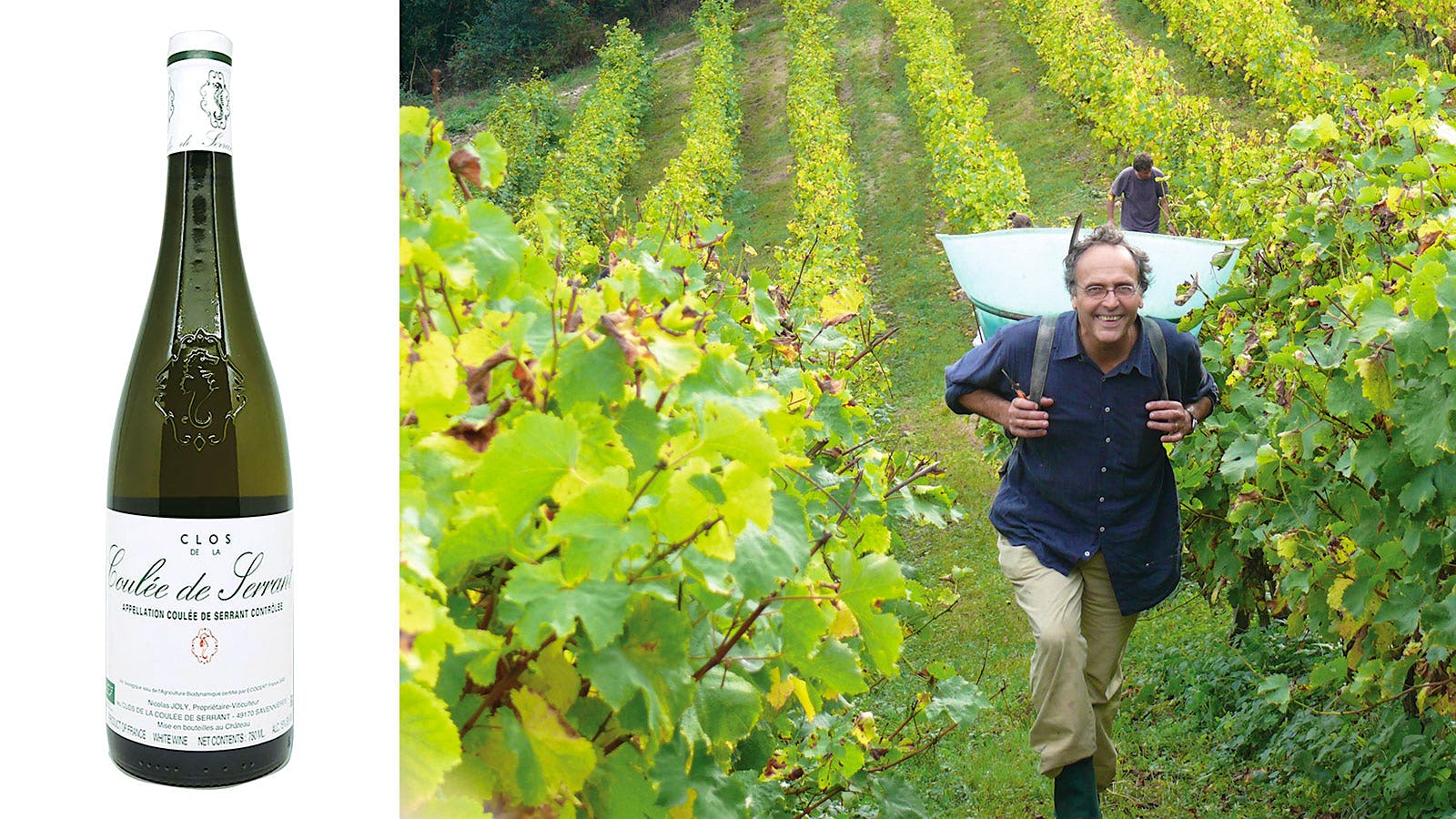


Nicolas Joly prescribes a simple test to determine whether a wine is “alive.” Leave the bottle open for weeks and taste it every few days or so. If the wine remains unchanged, or even improves over time, it is a “true, alive” wine. If it isn’t, the wine will become oxidized in one day. “When a wine has received life properly in the vineyard, then oxidation has no power,” Joly says. “We can taste when a wine’s energy has been destroyed by bad farming and then someone used enology in the cellar to ‘create’ the wine.”
At 80 years old, the world’s longtime leading evangelist for biodynamic viticulture retains the zeal of a recent convert. “Biodynamic farming is the only way to catch the life force and the originality of a place and put it in a bottle,” Joly explains emphatically.
A Biodynamic Pioneer in a Skeptical Age
Comments like these caused Joly to be widely dismissed as a wacky eccentric in the 1980s when he returned home, after working as an investment banker in New York and London, to take over his family’s estate in the Loire Valley’s Savennières commune. Early on he discovered Rudolf Steiner’s famous book on biodynamics and began converting his family’s most prized jewel—La Coulée de Serrant, a Chenin Blanc vineyard planted by Cistercian monks in the twelfth century so revered that it has its own appellation—to the practice. (King Louis XI called its wine “drops of gold.”) In the beginning, anxious neighbors called his parents to warn them that their son was destroying their beautiful vineyard with his lunatic ideas. Undeterred, he achieved full biodynamic certification in 1984, making him one of the very first wine producers anywhere to do so.

Over the decades, biodynamics has gone mainstream and become a global movement Joly has been instrumental in pioneering. There are now over 600 Demeter-certified biodynamic vineyards, with many more currently under conversion. Elite names like Domaine de la Romanée-Conti, Château Pontet-Canet and Château Palmer have been certified.
Today it’s generally accepted as the truth that the core tenets of biodynamic farming—eschewing chemicals and commercial yeasts, bringing animals into the vineyard, welcoming biodiversity over monoculture and employing complex organic preparations—make for healthier, living soils that ultimately yield more flavorful grapes. Many winemakers, whether they embrace all the practices of biodynamics or not, believe that grapes grown this way produce wines that are deeply expressive of a place in ways that commercially farmed grapes simply never will be. Even the cow horns and adherence to the lunar calendar that some skeptics still smirk at have gained wider respect, despite the fact that no one really understands why (or even if) they work.
Famille Joly’s Wines: A Legendary Trio
While biodynamic principles are no longer as controversial or polarizing as they once were, the wines of Nicolas Joly continue to be. Fluctuating wildly from vintage to vintage, they often require years in bottle to become approachable. They are not for every wine drinker. Critics complain of problems with bottle variation, oxidation and overripeness. Joly is unapologetically the last to pick. He’s convinced that Chenin Blanc must be totally ripe to reveal itself, even if that means higher alcohol levels and even signs of botrytis. “We are always in favor of fairly advanced maturity. People harvest too early to avoid the risk of mildew, but you don’t cut a flower before it blooms!”
The family makes three Chenin Blanc wines: La Coulée de Serrant, from the famous walled vineyard with its own A.O.C.; Le Clos de la Bergerie, which carries the Savennières Roche aux Moines appellation; and Les Vieux Clos, which is made from vineyards surrounding the Joly home in the Savennières appellation.
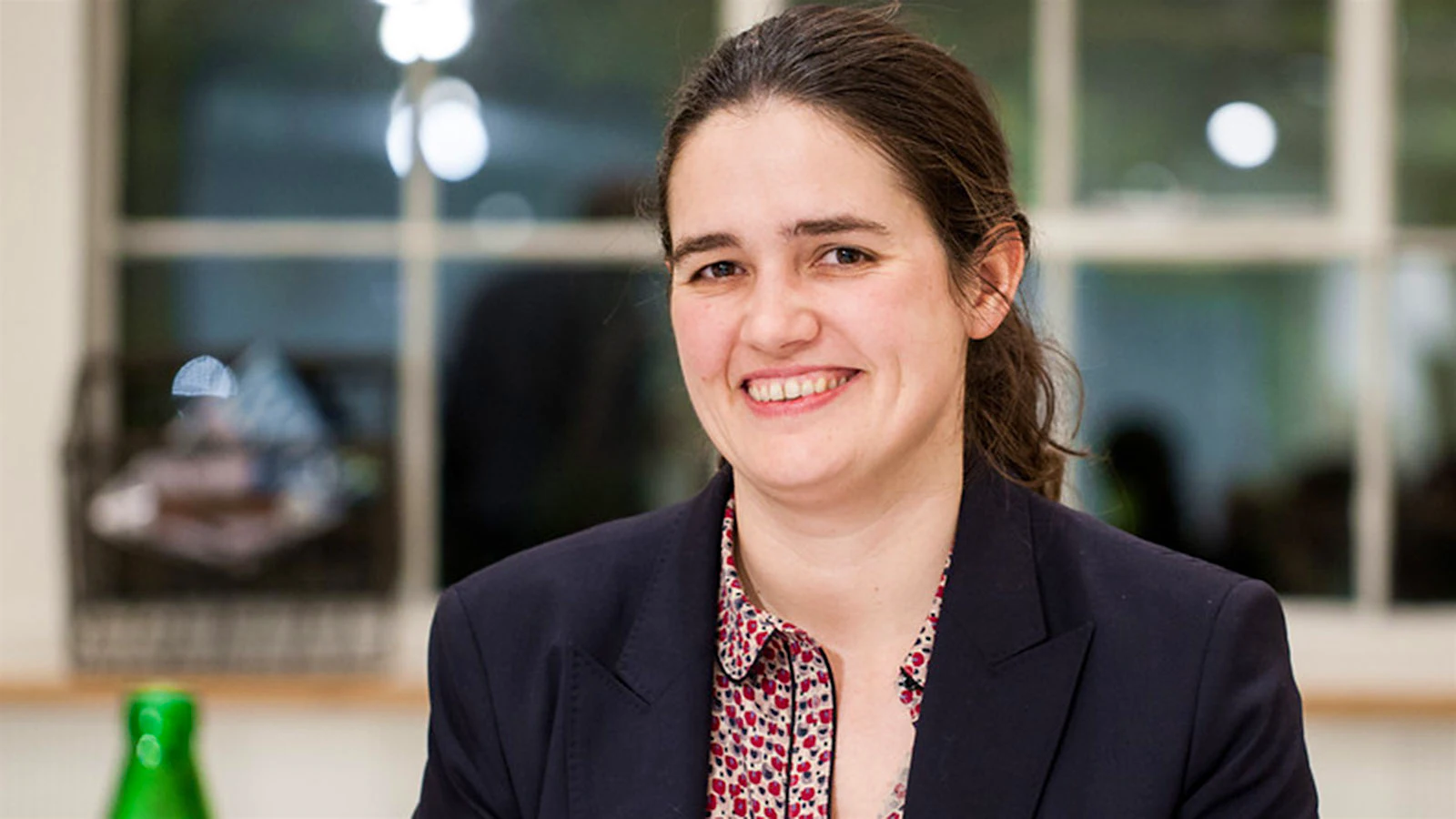
For his many fans—a cultishly devoted bunch—Joly’s wines are cerebral and transportive: raw, wild nectars that offer more of an intellectual exercise than a drinking experience. I find myself somewhere in the middle. I’m sometimes perplexed by his three cuvées, while in some vintages they completely entrance me and demand silent reflection.
Of all the top appellations in the Loire for Chenin Blanc, Savennières yields mineral-driven, muscular wines that are famously ageworthy and need the most time to unwind. (Joly and his daughter, Virginie, who has taken over winemaking at the estate, recommend waiting at least four to five years before opening.) Joly’s wines are all these things, yet they stand out from his neighbors’ as distinctive in often mysterious, enigmatic ways.
The strong emotion his wines elicit visibly delights Joly. “True wine is not always good or attractive, but it has something inside that touches you, that makes you feel,” he says. There is nothing that stirs up Joly’s ire more than aesthetically flawless wines, which have become standard fare in top regions everywhere. “The new generation creates wines in the cellar. With 320 different aromatic yeasts, you create the so-called perfect wine. Processed yeasts murder a wine. The essence of the place is no longer there.”
Eschewing Fashions—and ‘Natural’ Wine
The proliferation of biodynamic viticulture today and the focus on terroir-expressive winemaking doesn’t seem to give Joly the sort of satisfaction one might expect. According to Joly, the certification isn’t that difficult to achieve, and when biodynamics became fashionable, many producers simply used it as a marketing tool. “There is a well-known producer in Bordeaux talking a lot about biodynamics and being photographed with a llama,” he laughs. “What the hell is a llama doing in Bordeaux?” (Only native plants and animals belong in a vineyard, he believes.) In Joly’s eyes, the ranks of the truly committed remain small.
“The problem with biodynamics is that most people don’t go far enough. It takes time to push it far, but it makes your life very interesting.” For example, it’s easy to purchase the nine biodynamic treatments used to prevent pests and mildew in the vineyard, but true adherents to the practice must make their own treatments on their own land.
“You don’t buy them for Christ’s sake! You use your own cow!” Joly recently slaughtered his beloved cow and utilized the animal parts for his biodynamic treatments. “I hate to do it, I love my cows, they are fabulously horned, but he was 22 years old. It is for the soul of the animal, a rising force you bring to the place.”

He’s even more skeptical of the natural wine movement. “Natural wine means nothing,” he says. “Many guys do not want the constraint of biodynamic farming, so they move to call themselves natural.” Joly estimates that around one out of 10 self-identified natural wine producers are doing serious, thoughtful farming and just don’t want to be bothered with the hassle of biodynamic certification. But 90 percent of them, he thinks, are just chasing a trend. (He is not against sulfur dioxide, by the way, unlike most die-hard natural wine producers.)
Practicing real biodynamics takes time. “For me it is the work of a musician. When you start learning music, you are very painful to your neighbors, but every day you improve. The terroir is the musical instrument, biodynamics is the acoustics and the human being is the musician. It takes 10 years to truly understand this way of farming and to develop a deep understanding of your place.”
Preserving the ‘Life Force’ of Wine
Despite his dismal assessment of the state of most of the world’s winegrowing, spending time with Joly leaves one with a sense of optimism. He’s convinced, for example, that wine drinkers will drive the adoption of his way of farming. “We see consumers returning to the secret need of the heart to prefer true taste, not wines created by aesthetic plastic surgery, wines with beauty but no charm.” The changing climate, he thinks, will also force more growers in this direction. “A vine which is healthy has the ability to adapt to this strange, unusual climate. I strongly believe the world will be moving in this direction.”

After I met with Joly, I decided to use his method to test the “life force” of his top cuvée. I recorked and put aside the half-empty bottle of the excellent Coulée de Serrant 2021 that we’d tasted together earlier in the day. Over one week later, I poured a glass and found myself amazed by just how little the wine had evolved. With a core of savory power and shimmering orchard fruit, it was just as fresh, vibrant and captivating as it was the day it was opened. It’s a singular wine that could only have come from one small place on the planet.
“The more your place is alive, the more the secret acoustics will express themselves in your vines. Your vines can feel the intangibles that will become matter and they will hold onto that essence of place and energy,” Joly describes. “Biodynamics is a blessing of the earth.”
I can’t say that I completely understand his explanation for this phenomenon, but I’m an absolute believer in the results.
Watch senior editor Kristen Bieler’s Instagram Reel with Nicolas Joly