


Winemakers have numerous adversaries: phylloxera, smoke taint, birds and saboteurs, to name just a few. But one of their most persistent foes has been that oddly unthreatening-sounding scourge, powdery mildew (aka oïdium). This fungal disease, a menace to wine regions around the globe, creeps its way across vines’ leaves and onto grapes, ultimately choking yield and quality if not managed. Given the damage it inflicts, winemakers have long wondered what can be done to stop its spread. Some vintners turn to sulfur sprays, some to synthetic fungicides. But for French vineyard specialist Anthony Chaudron, the new weapon of choice is a familiar friend to gastronomes and chefs: garlic.
“Garlic is an anti-fungal, so it naturally fights off powdery mildew,” Chaudron told Unfiltered via email. “[It] reverses the [vines’] pH. The fungus no longer feels comfortable on the [vine].”
Chaudron first heard of using garlic as a preventative fungicide almost a decade ago. Gardeners and farmers have known for a long time that the foodstuff was a fungus fighter, which could be attributed to garlic's high concentration of allicin, a sulfur-based acid with several supposed health benefits for humans and plants alike. With the help of his friend Jonathan Sacy, now the operations manager at his family’s winery, Champagne Louis de Sacy, Chaudron was able to do full-scale vineyard trials of garlic spray on 22 acres of vines, determining that his scampi-friendly method does the best job of keeping oïdium at bay (as far as produce goes).
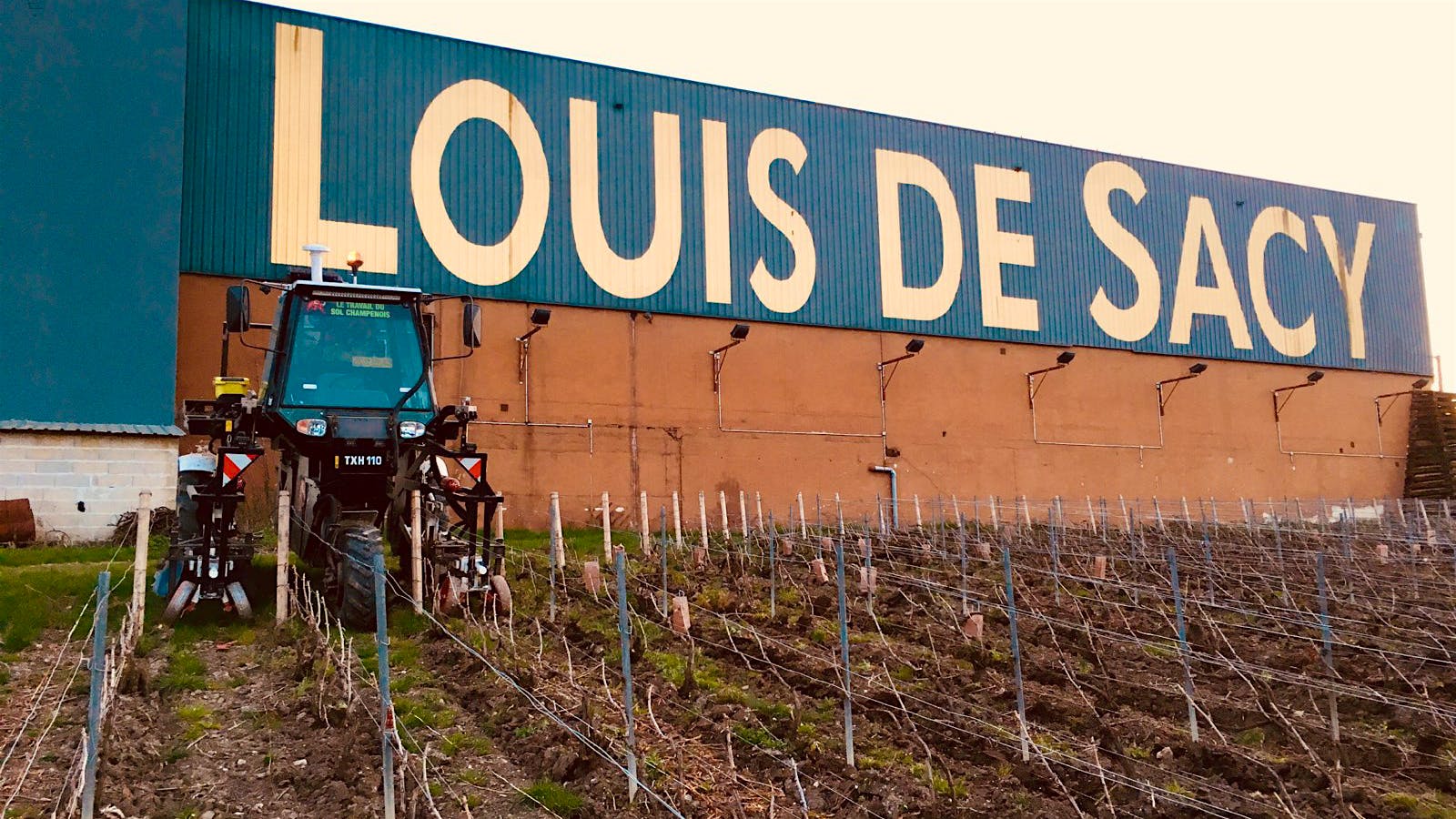
“To my knowledge, I [didn't] know of anyone who used this method in Champagne,” said Chaudron. “So I might be the first to use garlic against powdery mildew”; his technique has now been adopted by four domaines in the region. The mildew-buster uses organic garlic from France’s Lorraine region, macerating it in oil for 12 to 24 hours before making it into a rainwater-based spray. The spray is applied long before harvest in the growing season, so garlic aromas in the grapes are not an issue.
Per Chaudron, the use of garlic doesn’t break any of Champagne’s strict viticultural regulations and could even benefit winemakers’ wallets, being a cheaper alternative to sulfur. Some members of the Champagne community have been skeptical of his technique, he claimed. Nonetheless, Chaudron is hopeful that his pungent protective can fight the good fight at other estates. “Obviously, this method should become more widespread in all vineyards,” he said.
But the crisper drawer isn’t the only source of potential mildew solutions. On the laboratory side, a group of researchers have been developing a way to keep another disease, downy mildew, out. Simply put, they’re looking to throw off the flirting game of the microorganism that causes it.

The idea appears in new paper published last month in Current Biology, “Identification of the first oomycete mating-type locus sequence in the grapevine downy mildew pathogen, Plasmopara viticola,” based on work from researchers at France’s National Research Institute for Agriculture, Food and the Environment (INRAE) in Bordeaux and a few partner labs. The paper’s chief researcher, François Delmotte of the INRAE, gave us the lowdown on what it all means.
Delmotte and his team researched the DNA of several strains of Plasmopara viticola, the microorganism responsible for causing downy mildew in vineyards, taken from afflicted Cabernet Sauvignon, Chardonnay and other varieties. (Powdery mildew is a true fungal disease, while downy mildew is not; they tend to prefer different climate conditions and present similar, but distinguishable, patterns of infection on vines.)
“The discovery we have just made is fundamental,” said Delmotte. “We have identified the mating-type locus of grapevine downy mildew.” That's the part of the microorganism’s genome relating to mating and reproduction compatibility. Now that researchers know the genes that spur plasmopara’s reproduction, they could one day understand how to interrupt the organism’s microscopic mating rituals. Add this to research from Japan that identified the hormones involved in a similar microorganism's reproduction, and science is arming up to shut down downy mildew epidemics.

This practical application isn’t science fiction. It's been done before. Between 1974 and 1995, INRAE found a method to fight another vineyard pest, Lobesia botrana—the European grapevine moth—by disturbing its mating cycle with artificial pheromones, confusing communication between the female and male moths. “Today, up to 10 percent of the French vineyards [are using] ‘mating disruption,’” Delmotte observed. “The [new] method, when it will be fully developed, would prevent the epidemics [from starting].”
This technique could be used to defend crops other than vines, too. Potatoes are susceptible to another, similar microorganism. But more research is necessary: Next up, Delmotte’s team is planning to identify the exact genes involved in downy mildew’s mating hormone signals. They're also trying to reconstruct the history of its invasion of Europe from North America centuries ago, to determine how these shenanigans got started in the first place.
Enjoy Unfiltered? The best of Unfiltered's round-up of drinks in pop culture can now be delivered straight to your inbox every other week! Sign up now to receive the Unfiltered e-mail newsletter, featuring the latest scoop on how wine intersects with film, TV, music, sports, politics and more.