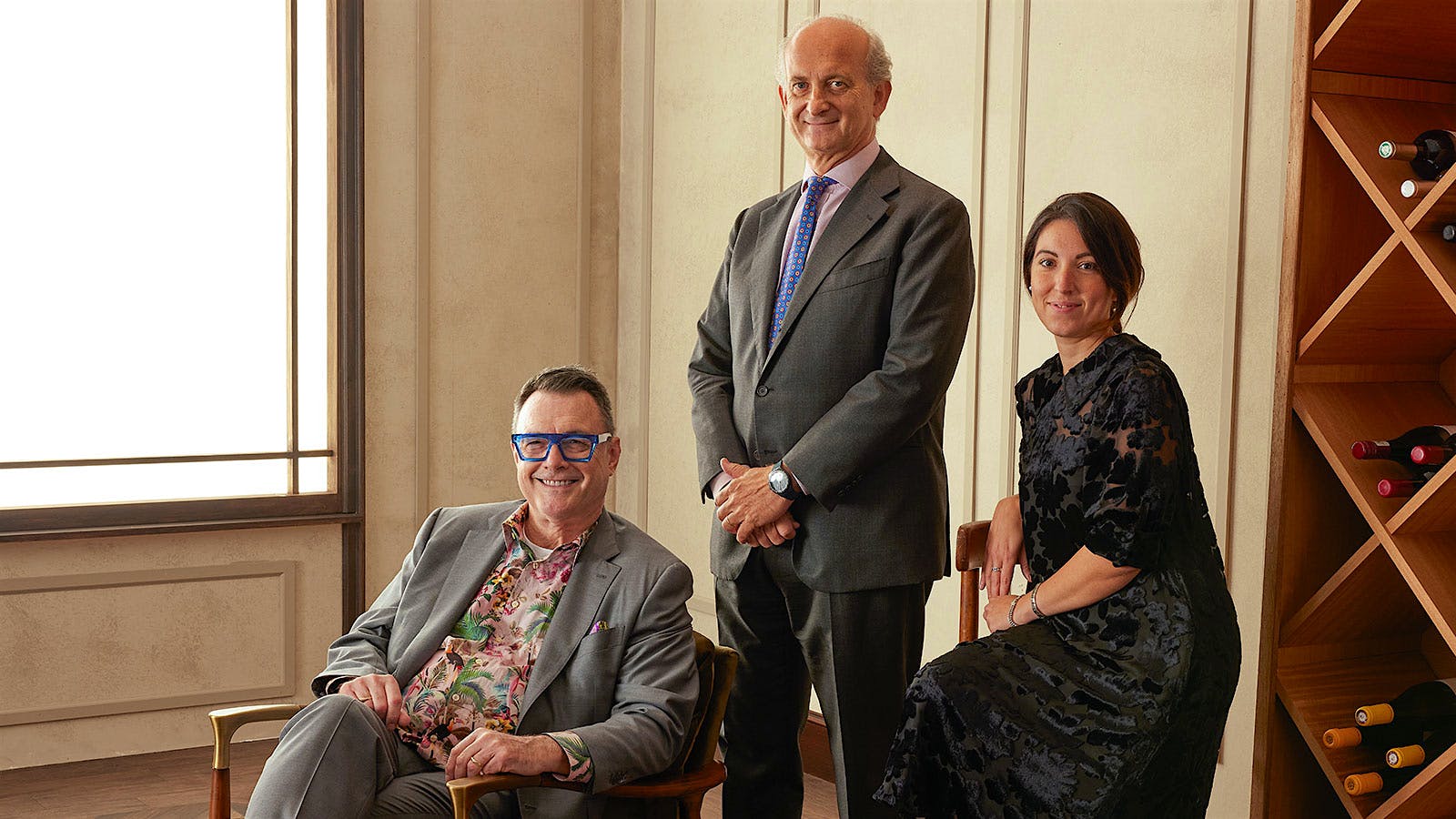


While introducing the eagerly anticipated Wine Experience seminar on Masseto, senior editor and Tuscany taster Bruce Sanderson called the wine “undeniably Italy’s greatest Merlot.” What followed demonstrated why collectors fill their cellars with the super Tuscan—if they can get their hands on it.
Sanderson started by asking Lamberto Frescobaldi, president of Italian wine company Marchesi Frescobaldi, how his family acquired the Masseto estate. The vintner chuckled: “It was an expensive day ... we had to eat onions and bread for many years ... [but] it’s a joy to have.”

Frescobaldi remarked that “Tuscans have in mind [only] Sangiovese—all the rest is second-best.” But the lower-elevation Bolgheri subregion is better suited to Bordeaux grapes, and early-ripening Merlot does especially well in the blue clay soils of the Masseto vineyard. In 1987, the first Masseto bottling was released commercially, and a legend was born.
The Masseto Toscana 2019 (98 points) was a spectacular start to the tasting. Sanderson praised its “incredible harmony and balance for such a young wine.” Winemaker and cellar master Gaia Cinnirella said 2019 was the first year the team added a small amount of Cabernet Franc, which performs well in hot vintages—“not to change the style of Masseto, but to preserve it.” The vintage was also the first made in Masseto’s new winery, which has twice the number of concrete tanks as the old winery to allow for more precise vinification.

The 2011 vintage (97), Sanderson said, showed more concentration and tannic structure. Cinnirella agreed: “If you have a bottle ... you can lose [it] in the cellar and wait a moment to drink it.” She detailed the estate’s careful grape selection process, which 10 women perform entirely by hand, and reflected that while using an optical sorter might “work better ... our task is not to make the perfect wine, but [to] make an emotional wine.”
The undisputed star of the lineup was the 2001 (99), which Sanderson called “legendary” and “magnificent.” The estate experienced an April frost that year, which resulted in smaller clusters and the loss of some potential fruit. But the weather allowed for a later, cooler harvest. Frescobaldi called the year a “turning point for the winery.”

Both Sanderson and Frescobaldi called the 1998 (97) “a different animal” compared to the 2001. Frescobaldi said it showed “a touch of greenness,” though he admired its slow maturation and “fresh acidity.” “If you dare [not] finish the glass, I’m going to be offended,” he joked, to widespread laughter.
Judging by the audience’s standing ovation, the seminar didn’t disappoint. While the wines reflected precision in the vineyard and cellar, their emotional depth, as Cinnirella observed, will linger in memory: “You have to feel the wine ... we have to feel free to [make] the right decision for the vintage, for the vineyard, for the moment.”