
Note: This tip is an excerpt from the Nov. 15, 2017, issue of Wine Spectator, "Barbara Banke."
In northwestern France, the Loire Valley winds its way inland from the Atlantic Ocean, eastward through the picturesque towns of Nantes, Angers and Tours to the appellations of Pouilly-Fumé and Sancerre, which face each other across the river. Both are known for their whites made from Sauvignon Blanc, yet generally speaking, those from Sancerre are crisper and leaner than their richer, more generous counterparts in Pouilly-Fumé. Here are three producers leading the way for quality in the region.
Domaine Dagueneau
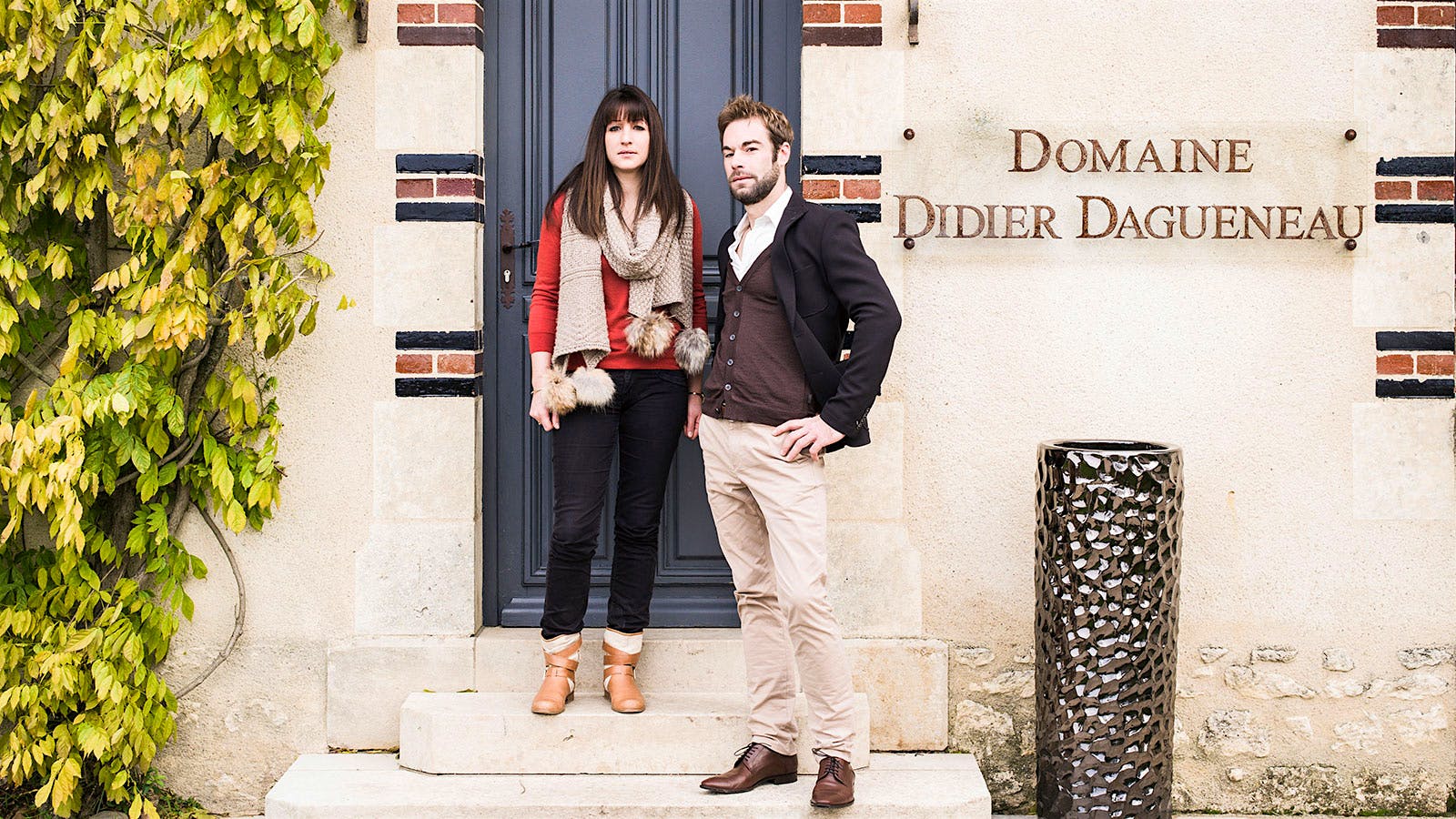
"I can't believe it's been almost 10 years that I've been at the head of the domaine," says Louis-Benjamin Dagueneau, who spearheads winemaking at his family's estate. His sister Charlotte has an administrative and commercial role.
Their father, Didier, founded Domaine Dagueneau in 1982 with 3 acres of vineyards; the winery followed in 1989, built atop a butte in the St.-Andelain commune of Pouilly-Fumé. Today, the estate is just shy of 30 acres in Pouilly-Fumé and 2.5 acres in Sancerre. Didier was notorious for going against the grain, both with his eccentric—at times combative—personality and through his unconventional wines.
Didier's death in a plane crash in 2008, at age 52, left the next generation in charge of the acclaimed winery overnight. With the passing of the torch came the responsibility of carrying on a legacy that had long taken a singular path.
"Didier didn't have any prejudices on methods. The way we work today is the fruit of 30 years of research," says Dagueneau. Much trial and error helped fine-tune the domaine's house style. Today, the cellar operates with a gravity system. The juice goes straight from the pneumatic presses down to the cuves, where it settles for two and a half to three days before fermentation. It's then inoculated with indigenous yeasts selected from the estate's vineyards, and malolactic fermentation is blocked.
The wines spend one year in French oak—unusual for Sauvignon Blanc from the region—on their lees and without racking. Dagueneau uses two types of barrels: 600-liter demi-muids; and 300-liter cigares, often found in Porto, which are elongated to maximize contact between the wine and its lees. The oak is around one-fifth new; he keeps each barrel for five years. After the élevage, the wine is blended in tanks in order to assimilate the influence of the different barrels.
Domaine Dagueneau makes five cuvées. The entry-level Blanc Fumé de Pouilly is a blend of several terroirs: two-thirds clay with silex (a distinctive flint soil) and one-third marl. Pur Sang comes from a parcel about 3 miles away from the winery, in the commune of St.-Laurent-l'Abbaye, which has well-drained clay soils with small silex deposits, yielding wines of elegance and finesse. Buisson Renard's clay soils, located at the bottom of the St.-Andelain butte, have bigger pieces of silex. The clay is richer down there, resulting in more powerful wines. The signature Silex cuvée sources from different silex-heavy parcels in the same sector, on top of the butte. This wine is more "intellectual," Dagueneau says, and needs more time than the others in his range to open up.
On the other side of the Loire River, the estate owns a limestone plot of Sancerre in the Mont Damné sector. Located mid-slope on a 75 percent grade, the vineyard had been abandoned after the advent of mechanization. Because of France's inheritance laws, the land had a dozen different owners scattered across the country. It took Didier two years to find them all; he finally bought the vineyard in 2002. Luckily, it had been unused long enough to escape the synthetic-fertilizer era, and the soils he acquired were clean.
Beyond Sauvignon Blanc, Dagueneau has some side projects that defy the strict AOC rules that he feels stifle creativity. He has developed a 100 percent Petit Meslier, oxidative-style sparkling wine. He also recently bought half an acre of land on which he plans to plant Chenin Blanc.
Pascal Jolivet

Pascal Jolivet has the animated energy of someone constantly looking for a new thrill. His namesake brand celebrates its 30th anniversary this year, and the vigneron is showing no signs of slowing down.
Jolivet comes from a wine family. His grandfather Lucien and great-uncle Louis had both been chefs de cave at Pouilly-Fumé's Château de Tracy and created their own négociant company in 1926. The young Pascal was working at the Pommery Champagne house when his father, Jacques, suggested he take over a small négoce firm he had bought a few years before. In 1987, at age 25, Jolivet got his feet wet as an entrepreneur in the wine business.
Soon, he wanted his own vines. He built a winery in 1990 and, in 1993, bought a 15-acre vineyard in Bué, just outside Sancerre, from his cousins. He has gradually expanded over the years and now owns around 123 acres, both in Sancerre and Pouilly-Fumé.
He drew on his experience with Champagne's house-style model as he developed his vision for the Jolivet brand, starting with the regular Sancerre cuvée. "Here, we don't have three varietals and one type of soil," he says. "It's the other way around: We have three types of soil and one varietal. The Jolivet Sancerre, I imagined it as finding harmony between limestone, silex and clay."
Pascal Jolivet now makes more than a dozen cuvées. The higher-end, single-vineyard bottlings showcase the various terroirs of both Sancerre and Pouilly-Fumé. The limestone Sancerre Les Caillottes and clay-limestone Pouilly-Fumé Terres Blanches are both from 40-year-old vines. Two unfiltered cuvées—Sancerre Sauvage from limestone soils and Pouilly-Fumé Indigène from silex—are at the top of the range. The former was the first Jolivet wine to be made organically. The estate makes two other organic wines: Le Chêne Marchand, from limestone in Sancerre, and Le Roc, from a small silex plot also in Sancerre, which is fermented in one-third cement egg and two-thirds stainless steel.
As of this year, Jolivet plans to convert the entire single-vineyard range to organic winemaking, a continuation of his founding philosophy. From the beginning, he has strongly believed in indigenous yeasts, long natural fermentations and minimal amounts of sulfur. The wines age one year on the lees, none of it in oak, and none of the wines go through fining.
Looking around the winery, gravity-operated from sorting to bottling, one will find a cement egg here, an amphora cuve there. Jolivet is also in the early stages of trials with biodynamics.
A new face at the estate indulges him in his thirst for experimentation. In 2013, Jolivet's longtime enologist quit suddenly, two months before harvest. Jolivet recalls saying to him, "OK, but you have to help me find someone, and they need to be better than you. And I'm not going to be around forever, so they need to be better than me too." Valentina Buoso proved to be a perfect match. She had experience in Chile, Australia, New Zealand, Mendocino and Oregon and had completed a thesis on indigenous yeast. She has been with the domaine ever since.
Michel Redde

The Reddes have been a family of winegrowers in the Pouilly-Fumé region for 13 generations. In the 1950s, Michel Redde gradually bought more vineyards, eventually building a cellar and tasting room, called the "Moynerie," in 1966. Today, the two succeeding generations are at the helm. Thierry Redde and his sons Sébastien and Romain operate the 100-acre, organically farmed estate together. Sébastien joined in 2003 and handles the cellar; Romain came aboard in 2005 and focuses on the vineyards.
The vintners make a cuvée from a plot of Sancerre, but their real passion is Pouilly-Fumé and the expression of its varied terroirs. Their entry-level Petit-Fumé (which will soon be marketed under a new name) is a crisp, fruity Sauvignon Blanc from young vines, bottled three months after harvest. Sébastien created the cuvée in 2004 after coming back from an internship in South Africa where he worked with this style of wine.
Their six other Pouilly-Fumé cuvées, however, are more serious. They see at least one year of aging on the lees, mostly in oak. Moynerie is a blend of the four soils found in the appellation: the Portlandian limestone of Tracy-sur-Loire, the Oxfordian limestone of St.-Martin-sur-Nohain, the Kimmeridgian marl of Pouilly-sur-Loire and the clay with silex of St.-Andelain. It is aged in 60 percent stainless steel with the rest split between foudre and demi-muid.
The first single-vineyard bottling from the estate, Majorum, came in 1973, and is made from vines that are now 40 years old. Les Cornets, Les Champs des Billons and Les Bois de St.-Andelain followed, each focusing on one of the Pouilly-Fumé terroirs; these last three are aged entirely in oak.
In fact, the 2002 vintage was the last to see 100 percent stainless steel in the vinification and élevage at the estate. Sébastien explains that his grandfather was against oak. He and his brother, however, thought otherwise, and phased it in over time. "We wanted to do it slowly. We really wanted to work on this micro-oxygenation rather than the input of oak to disguise anything," he says. "We want to highlight the characteristics of the terroir and the variety." His grandfather's and father's wines were richer in style, he adds; he and his brother are looking to make more precise wines.
The new generation has settled in comfortably. The brothers' latest contribution to the estate is a small, silex-heavy parcel that they acquired in 2009. They originally bought 6 acres, but when they started the labor-intensive process of scouring the land to prepare for planting, they realized that the more they went up the slope, the more silex there was on the ground. They returned to the owner and asked to buy the rest of the plot. They now have 13.5 acres, 11 of them planted.
The vines are in a quarry filled with large chunks of heat-radiating silex. "It's the Châteauneuf-du-Pape of silex!" says Sébastien. The resulting wine is the most mineral-driven of the range. It's called Barre à Mine, or "crowbar," named after the tool that helped them painstakingly form the vineyard.