

For most Americans, the reference point for Beaujolais remains Beaujolais Nouveau, the simple, fresh and fruity red that has hit U.S. wine shelves on the third Thursday of each November for many decades, just in time for Thanksgiving celebrations.
Yet Beaujolais has far greater complexity to offer, particularly at the top of the region’s classification pyramid where quality skyrockets—Cru Beaujolais.
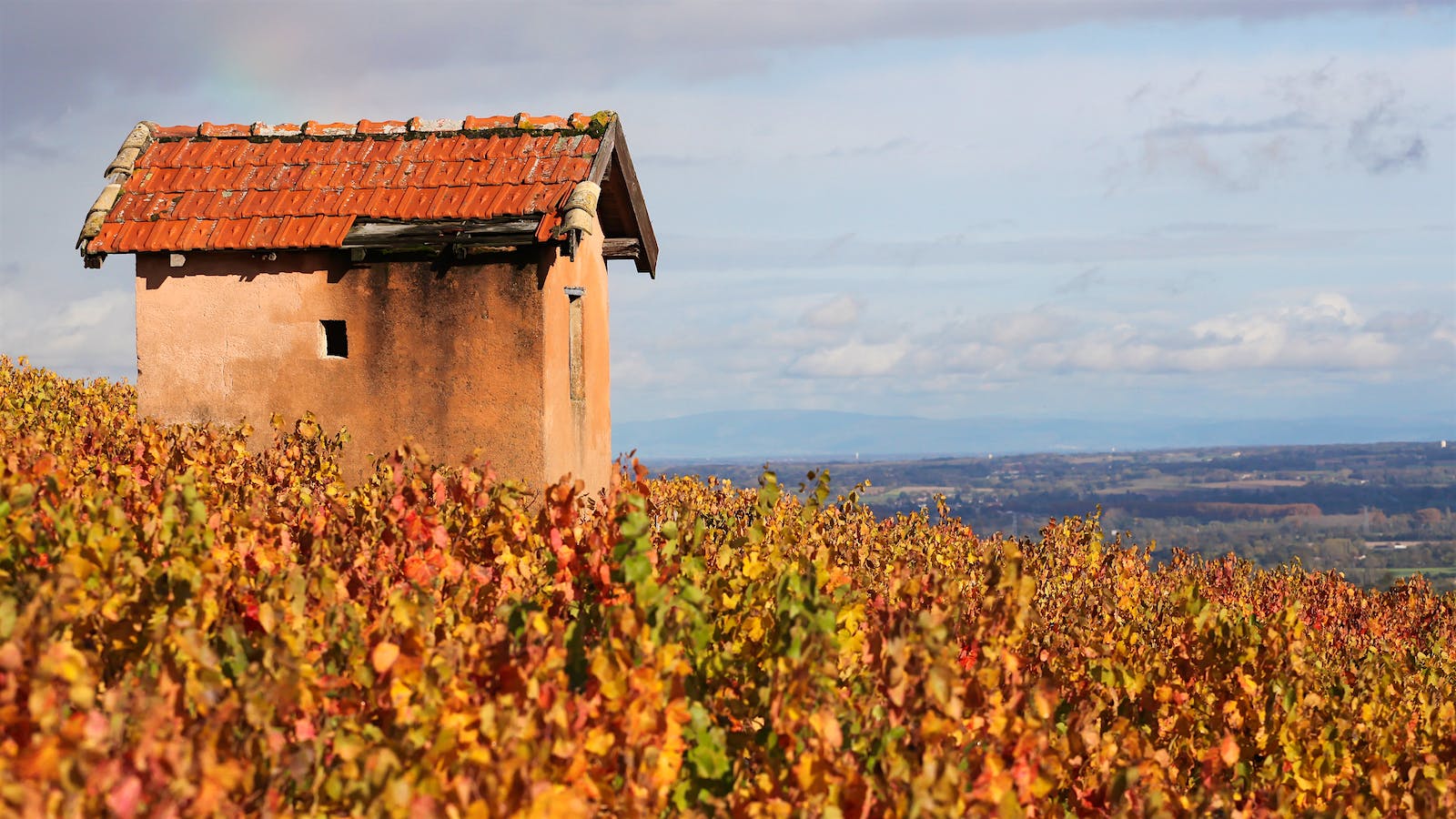
These 10 crus (villages, or “classified-growths”), located in the northern half of the Beaujolais region, produce increasingly world-class wines which aside from using the same Gamay grape have little in common with their Nouveau counterparts. Cru Beaujolais are serious—and seriously delicious—wines with impressive flavor concentration and the ability to age.
The Cru Beaujolais quality movement accelerated in the 1990s, led by a group of ambitious producers who sought out premier vineyard sites at higher elevations; they focused on lower yields and terroir expression and took a more Burgundian approach to winemaking so that their wines could improve in bottle. (Importantly, they moved away from carbonic maceration, the technique Nouveau producers use whereby whole grapes are fermented in sealed tanks so that the carbon dioxide produced by fermentation extracts fruit flavors and not tannin.)
The crus initially drew attention as less-expensive alternatives to Burgundy, but in the past decade have developed a cultlike status and devoted following all their own and are found on top restaurant wine lists. While the greater market for Beaujolais, so heavily dependent on Nouveau, has suffered serious decline in recent years, the crus have grown in sales and esteem. And, although prices have been climbing, they still represent excellent value (particularly compared with their neighbor to the north).

Each of the 10 crus has its own distinct personality. Here is what to look for:
St.-Amour
The most northerly of the 10 crus, St.-Amour is located just south of the border of Burgundy’s Mâcon region. Although it is the second smallest of the crus, it boasts an impressive diversity of soils types, from clay and sandstone to granite, schist and limestone. This explains the range of wine styles found here, including a significant amount of charming white wine, crafted primarily from Chardonnay and Aligoté grapes and labeled simply Beaujolais Blanc.
St.-Amour is associated with a lighter style of Gamay, marked by floral, soft red fruit and spice notes and a pronounced minerality, but the appellation is also capable of more intensely flavored, fuller-bodied reds, packed with ripe cherry and raspberry flavors.
Fun Fact: While most of the 10 Beaujolais crus were established in the 1930s, St.-Amour was not officially designated a cru until February 1946. (And yes, sales do spike during Valentine’s Day.)
Recommended Examples:
Moulin-à-Vent
Looking for Beaujolais with (almost uncharacteristic) power, volume and concentration? Seek out Moulin-à-Vent. A much-acclaimed cru, it’s known for producing the most structured, ageworthy—and among the more expensive—wines in Beaujolais. Soil types here, which include calcareous marl and deep granite, are distinguished by the presence of pink granite and result in low-yielding vines that produce wines of greater density. Gamay here showcases its signature red berry and floral notes, punctuated by spice and earth. The wines of Moulin-à-Vent can easily be mistaken for Pinot Noir from Burgundy, particularly as they age.
Fun Fact: Moulin-à-Vent translates as “windmill,” and wines from vineyards grown on the slopes closest to the windmill from which the region takes its name are the longest-lived.
Recommended:
Château des Jacques (Louis Jadot)
Morgon
One of the best-known and easiest to find crus in the U.S., Morgon is famous for its concentration, as well as its bold style. On a scale of weight and structure, Morgon falls right behind Moulin-à-Vent—and its wines are similarly ageworthy.
It’s the second-largest cru, and while there is some soil diversity, Morgon is overwhelmingly composed of granite, which contributes to the wines’ higher tannic profile and flavor intensity (think: violets, ripe cherry, kirsch and minerals). Of the six named vineyards here, the most coveted, Côte du Py, sits on an extinct volcano.
Fun Fact: The modern Beaujolais Cru quality movement started here, when Marcel Lapierre, Jean Foillard, Jean-Paul Thévenet and Guy Breton (dubbed the Gang of Four) pledged to seek out the region’s premier sites and craft wine to rival Burgundy in terms of quality and seriousness—at a fraction of the price.
Recommended:

Fleurie
True to its name (which means “flower”), Fleurie produces Gamay that is distinguished by pronounced floral aromatics, and is considered one of the most elegant of the crus. The unique pink granite soil dominates throughout, yet wine style varies with subtler soil variations: There is more clay in the west near the border of Moulin-à-Vent, and wines grown there are more complex and big-boned, whereas sandier soils in the southern parts of the appellation yield lighter wines.
Fun Fact: While Moulin-à-Vent is sometimes referred to as the “King of Beaujolais,” Fleurie is often called the Queen, for the elegant, floral profile of the wines.
Recommended:
Juliénas
While Juliénas may lack the notoriety of other crus and an abundance of top producers, the region is capable of some truly great, and densely structured, wine. Grown on the southern slopes of Mont du Bessay, Juliénas vineyards are blessed with excellent sun exposure and soils that range from schist and sandstone to clay. Wines here fall decidedly on the weightier end of the spectrum for Beaujolais, marked by pronounced dark cherry and earth, firm tannins and a signature spiciness.
Fun Fact: Named for the one and only Julius Caesar, Juliénas can trace its winemaking history back 2,000 years, when the Roman general took power.
Recommended:
Chénas
Very little Chénas makes it to the U.S. market, which is a shame, because the region produces some very interesting wines. It’s the smallest cru—both in geographical size and in production volume—and its vineyards sit on the slopes of the Mont Remont. Like its neighbor to the west, Moulin-à-Vent, Chénas benefits from low-fertility granite soils that yield tannic, firmly built wines with a distinct minerality that intensifies with age. They offer plenty of fruit and floral notes, too, typically in the form of expressive red currant and blackberry laced with spice.
Fun Fact: Chénas is named in honor of the ancient oak (“chênes”) forests that once covered this land until they were razed by the Romans, then planted with vines on official order from King Philippe V in the early 14th century.
Recommended:
Régnié
If Régnié is the least known cru, that’s likely because it’s the youngest: While most crus were established in the 1930s, it wasn’t elevated until 1988, after years of lobbying by the region’s winegrowers for inclusion. One of the highest-elevation crus in the region, Régnié features the classic Beaujolais mix of granite, clay and sandy soils in which Gamay thrives. Reds here tend to showcase fresh, bright raspberry flavors with a relatively full body and a signature spicy character.
Fun Fact: While Régnié may not be famous, within its borders lie several acres of the tiny town of Lantignié, one of the most renowned of the 38 villages in all of Beaujolais, allowed to attach its communal name to the Beaujolais-Villages appellation.
Recommended:

Brouilly
Beaujolais’ largest and most southern cru, Brouilly is the go-to source for fruit-driven, accessible, refreshing Gamay, perfect for enjoying young. The appellation makes more wine than any other cru, and stylistically, Brouilly’s wines are less floral than the others, veering more towards plum and juicy red berry flavors. All the typical Beaujolais soil types are represented across Brouilly’s six communes, which surround Mont Brouilly (and the smaller, more elite Côte de Brouilly).
Fun Fact: As early as the mid-1700s, there were 16 small communes in Brouilly authorized to sell their wines in Paris. Today, 20 percent of the region’s wines are sold to Parisian bistros.
Recommended:
Côte de Brouilly
Surrounded completely by the larger Brouilly cru, the far tinier Côte de Brouilly sits much higher, on elevated slopes ascending Mont Brouilly. Gamay expresses itself noticeably differently on this hillside, where loamy clay soils and lower yielding vines—many of them quite old—result in more structured wines with an elegant violet and cassis profile. Owing to the ample sunshine these vineyards receive, Côte de Brouilly is usually one of the first crus to begin harvest in Beaujolais.
Fun Fact: Brulius (the region’s namesake) was a Roman lieutenant credited with planting vines here 2,000 years ago. At harvest, growers hike up to the chapel (Notre Dame du Raisin) perched atop Mont Brouilly to pray that the phylloxera vine plague will not return to France’s vineyards.
Recommended:
Chiroubles
Fans of superfresh, vibrant wines will find many to choose from in this cru. Planted at the highest altitudes in Beaujolais, Chiroubles’ vineyards produce bright, red-fruited wines that tend to be lighter in body and offer some of the same floral character as neighboring Fleurie. Grapes ripen about one week later here than in the rest of the region, due to very cool nighttime temperatures, which helps retain acidity and contributes to the region’s crisp, racy style.
Fun Fact: The region was developed by wealthy Lyonnais in the 15th century, but winemaking was started here in the Middle Ages by Benedictine monks.
Recommended: