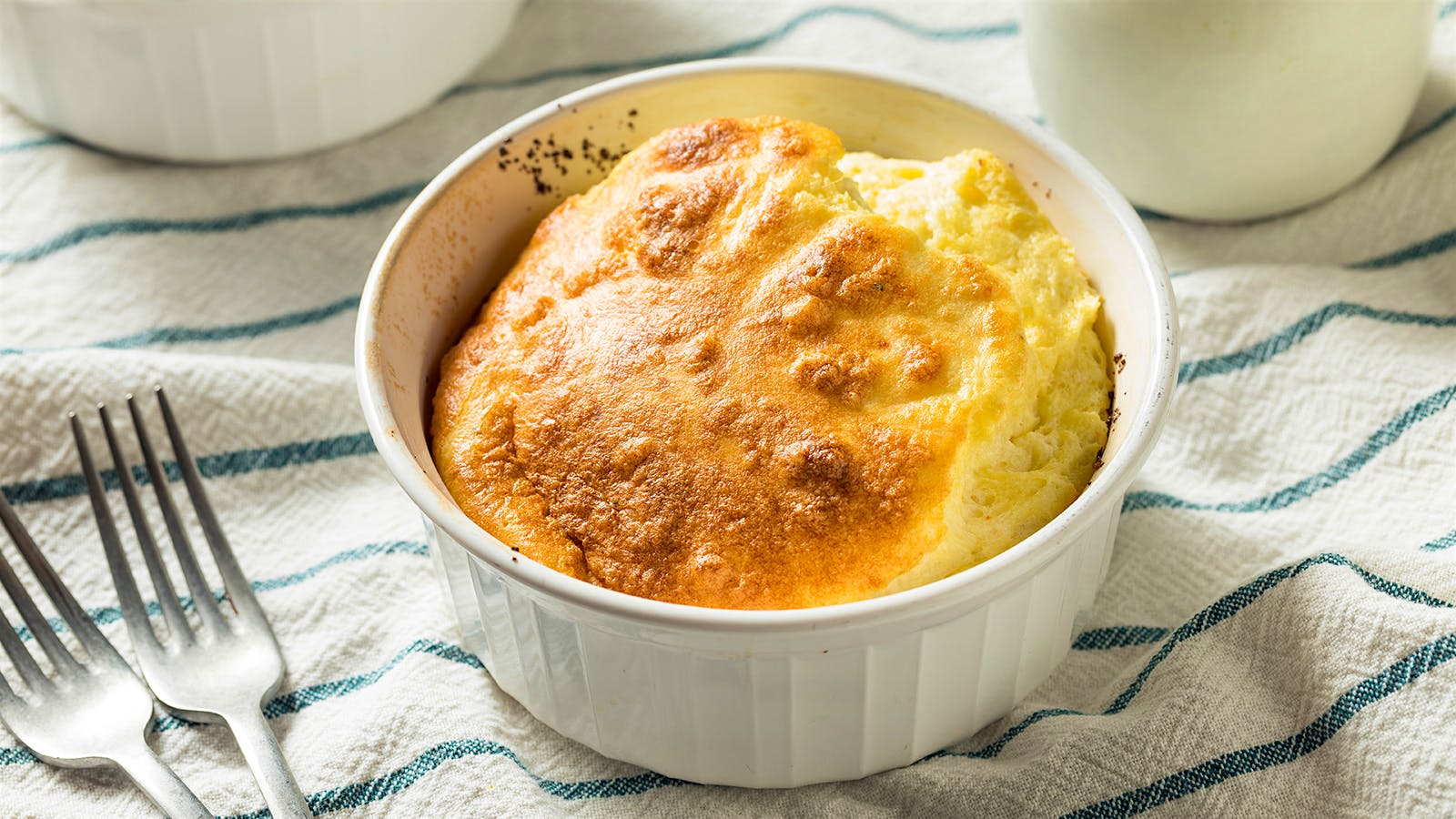


Soufflés are pure witchcraft. The volume lift in the oven is like some sort of superhero transformation, with mild-mannered eggs ballooning into a big light-as-air treat that can carry any flavor, savory or sweet.
As a result, people are afraid to try them at home. Fear of a falling soufflé causes people to leave them to trained professionals. (Note: Any chef will tell you that even a perfect soufflé will fall eventually, so don’t sweat it—the trick is to postpone the inevitable.) But soufflés are really simple to make and often feature pretty humble ingredients.
All soufflés have two elements. First, the base, built on egg yolks and flavor elements. And then the egg whites, whipped to peaks to give the thing lift. The two elements are gently folded together to integrate the yolks and flavor with the air bubbles you whipped into the whites. In the oven, those bubbles will expand. The whole has nowhere to go but up and magically climbs above the edge of the dish.
The recipe below, which appeared in a piece by our cheese columnist Dave Gibbons, is a savory classic from esteemed chef Guy Savoy, whose Las Vegas restaurant has held a Wine Spectator Grand Award since 2008. The recipe is pretty straightforward, and Savoy has only one gentle warning: “It all depends on following the recipe properly, step by step.”
It’s a vehicle for delicious aged Comté, from southeastern France, but other cheeses—Gruyère, Cheddar or Parmigiano-Reggiano are good ones—can be subbed in. The base uses a béchamel to carry the cheese, but if you were making a sweet soufflé, the base would be pastry cream: a custard.

Once you’ve mastered the basic technique, you can start playing around with flavors. Beyond other cheeses, you can bring in herbs, vegetables—you name it. Weight is the main consideration. And while I firmly believe that the vast majority of dessert soufflés should be chocolate, I’ve had delicious fruit-based ones too, and an awful lot of people like Grand Marnier. You will feel like you can leap tall buildings in a single bound.
A Note on Comté: To my great horror, I have just learned that one of my most worldly, cultured coworkers has not only never made a soufflé but also
Never.
Had.
That’s an outrage. It’s in the category of Alpine cheeses, which means Swiss cheese but from the French side of the mountains. Think of it as Gruyère plus. It will be a little nuttier, sweeter and grassier. They’re typically released from four months to three years old. Older versions have more concentrated flavor and less moisture. Any will work here, though more moisture leads to more melty integration. Brands are not crucial, but if you see Marcel Petite or Les Trois Comtois, try them. Both are aged in former military facilities dug out of the mountains, so you can help beat swords into plowshares.
Owen’s Tips for the Perfect Soufflé
- Carefully note ramekin sizes—a little difference can cause problems. And while practiced cooks make big soufflés, it is best to start small.
- Before you start, prepare the ramekins with butter and flour (or sugar, if you’re making a sweet version), which will help the batter to climb.
- Chill the bowl for the whites so that they whip up more quickly. Many chefs prefer whipping by hand because that gives better control and protects against overwhipping. A pinch of salt or cream of tartar (which has wine origins) will help too.
- Don’t pretend that you can skip the water bath.
Which Wines Pair Well with Cheese Soufflé?
Here you’re matching to the cheese, so depending on which cheese you use, you might want to adjust your wine. For the Comté in this recipe, I would apply the old “what grows together goes together” rule. Since Comté is made in the Jura Valley between Burgundy and Switzerland, I would serve whites from that region. The Jura is a bit of a Shangri-La and has preserved its traditional techniques for making enormous wheels of cheese and distinctive wines.
Traditionally the wines are not topped off in barrel, and many develop a layer of yeast on top. As a result, they develop singular oxidative, nutty flavors in addition to their fruit and mineral character. They are a bit like Sherry, minus the Spanish wine’s fortification.

Some people, myself included, find this style compelling and appetizing. Others don’t want it anywhere near their nose, let alone their mouth. These days, some producers there—many recent arrivals—are starting to buck tradition and produce wines that are sometimes described as “clean.” Below are options for both camps, but remember: You don’t have to pick a side.
Sometimes you feel like a nut:
Domaine Dugois Savagnin Arbois Sous Voile 2021 (90, $40)
A fragrant style, with fino Sherry–like nuttiness and green tea tannins supporting a range of dried orange peel, blanched almond and green apple. Oxidative, with beautiful, fresh saltiness.—Kristen Bieler
Rolet Père & Fils Savagnin Côtes du Jura 2018 (92, $50)
A beautiful, complex example of a unique style. Having concentrated with time, this white shows beautiful aromatics and saline intensity, with a hint of waxiness to the nutty, toasty layers of plum, melon and chamomile extract. Dried grass and bitter herbs play out on the long, perfumed finish. Seriously structured and long, with hazelnut details ringing on and on.—K.B.
Sometimes you don’t:
Domaine du Pélican Savagnin Arbois Grand Curoulet Ouillé 2023 (92, $84)
Shows real concentration and power, with savory, mouthwatering acidity powering through orchard fruit notes layered with salted butter, toasted almond and smoky herbs. Oily and flinty, with tannins picking up steam through the long finish, lined in crushed mineral details and white tea tannins.—K.B.
Rijckaert Savagnin Arbois 2022 (91, $52)
A savory, silky white, featuring star fruit and apple set against a fine beam of tangy, lemony acidity. Toasted macadamia nut and shortbread notes add warmth, along with details of allspice and cinnamon. This is lithe and light on its feet through the earth-tinged, medium finish. Distinctive and delicious for the style.—K.B.
How to Make Guy Savoy’s Soufflé au Comté

Ingredients
- 4 eggs, separated
- 7 ounces aged Comté cheese, grated
- 4 tablespoons butter, softened
- 4 tablespoons all-purpose flour
- 7 ounces milk
- Fine salt
- Freshly ground black pepper
Preparation
1. Preheat the oven to 400° F. Put a kettle of water on the stove to boil.
2. Use 1 tablespoon of the butter to coat the insides of four 8-ounce ramekins, then dust them with flour. Set them aside in a cool spot.
3. Make a béchamel by melting the remaining 3 tablespoons butter in a saucepan over medium heat. Stir in the flour until well-combined and cook for about 2 minutes, stirring constantly. Do not brown; lower the heat if necessary. Add the milk and cook, stirring regularly, until the sauce thickens.
4. Remove the pan from the heat and stir in the egg yolks and cheese. Season with salt and ground pepper. Place the egg whites and a pinch of salt in a well-chilled metal bowl. Whip the whites with a large whisk until they form soft peaks; this should take 5 to 10 minutes. Gently fold the egg whites into the cheese mixture, one third at a time. Do not overmix.
5. Place equal portions of the batter in each ramekin. To ensure the soufflés rise into nice crowns, run a knife blade around the inside of each one to loosen the batter from the sides of the ramekins.
6. Prepare a bain-marie by pouring boiling water into a 9-by-13-inch metal baking pan to a depth of ¾ of an inch. Place the ramekins in the pan, then carefully transfer it to the oven, making sure no water spills into the batter. Bake until the soufflés are puffed up and golden brown on top, 15 to 20 minutes. Serve hot. Serves 4.
The latest recipes, food-and-wine pairings, cocktail features and more can now be delivered straight to your inbox with our personalized newsletters! Sign up to receive the Sips and Tips email newsletter.