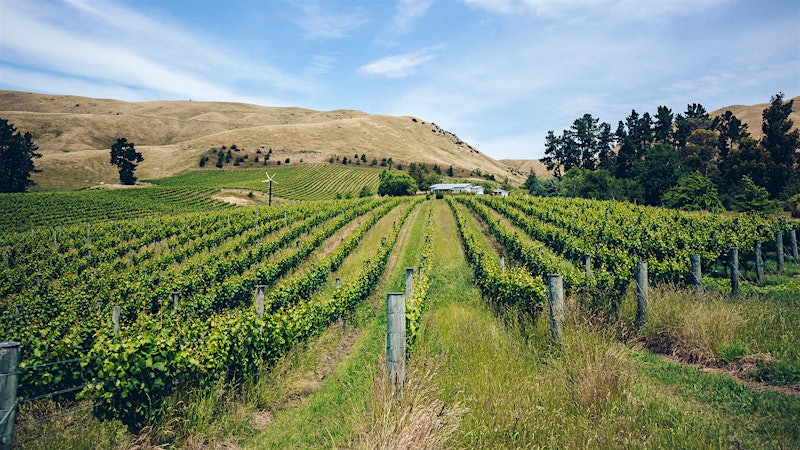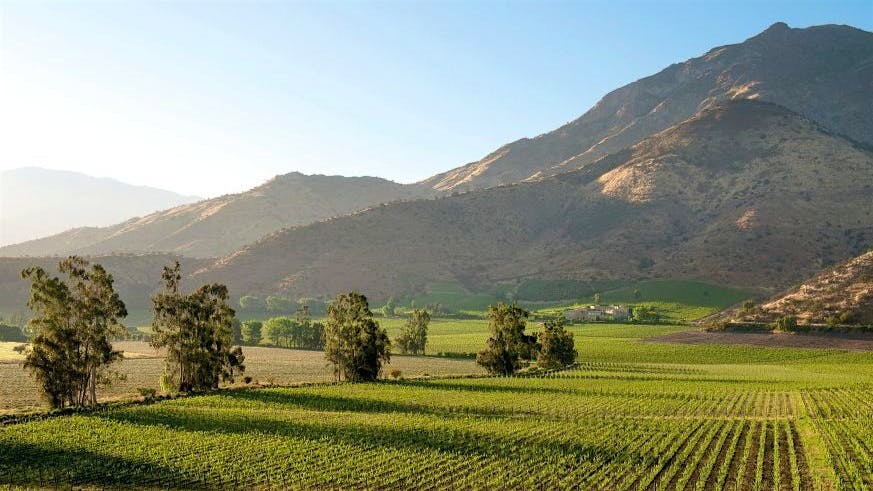


Historically, Chile has been known as a value-oriented wine region. In recent years, industry leaders have championed a broader message as the country evolves: Chile as a place of diversity and discovery.
This diversity is rooted in Chile’s viticultural geography, spanning 900 miles—from arid, high-elevation areas to warm Mediterranean climates, cool maritime regions and rainier austral territories—to produce a wide spectrum of wines.
Chile’s many regions and grapes offer a competitive advantage, but they require strategic navigation. Less-recognized provinces such as Limarí and Itata craft distinctive, terroir-driven wines, though they’re still building recognition among wine drinkers when compared with well-known areas like the Maipo or Colchagua valleys.
Meanwhile, save for Cabernet Sauvignon and Sauvignon Blanc (accounting for nearly 45% of the country’s vines), most varietals are produced in modest volumes by medium to small wineries; they face significant hurdles, such as limited resources and export networks.
Chile ranks fourth among wine exporters globally, demonstrating its strength and reliability. Yet this success is largely driven by a handful of conglomerates whose scale reinforces Chile’s image as a predictable wine region rather than one with exciting terroirs.
“Many in the past 20 years have produced wine with dimensions while forgetting location and varietal expression,” says Antinori CEO Renzo Cotarella, who oversees winemaking at Antinori’s numerous properties, including Viña Haras de Pirque in Chile. “We need to make wine with the personality of the place. A lot of work has been done in order to promote Chilean wines. But we still have a lot to do.”
This is the pivotal moment Chile faces heading into 2026 as a country rich with opportunity, navigating real challenges but with the foundation and expertise to succeed.
![A map of Chile’s winemaking and grapegrowing regions.]](https://mshanken.imgix.net/wso/bolt/MagazineArticles/2026/053126/chilemap_900-2-.jpg?auto=compress,format,&sharp=5&vib=20&q=70&w=320 320w,https://mshanken.imgix.net/wso/bolt/MagazineArticles/2026/053126/chilemap_900-2-.jpg?auto=compress,format,&sharp=5&vib=20&q=70&w=320 640w,https://mshanken.imgix.net/wso/bolt/MagazineArticles/2026/053126/chilemap_900-2-.jpg?auto=compress,format,&sharp=5&vib=20&q=70&w=384 768w,https://mshanken.imgix.net/wso/bolt/MagazineArticles/2026/053126/chilemap_900-2-.jpg?auto=compress,format,&sharp=5&vib=20&q=70&w=828 828w)
Since my previous report (“Chile at the Pinnacle,” May 31, 2025), I have reviewed 104 wines (a 30% decrease from last year and nearly 40% from two years ago). Does the reduced number of submissions stem from the wine industry’s global challenges, or something else?
When I posed my concerns to Cotarella and others, Viña Montes chief winemaker Aurelio Montes Jr. noted that recent travels to the U.S. have revealed challenges and opportunities. “[Chile is] less present in wineshops, and there are fewer wines on restaurant lists.”
When I asked what can be done, Montes affirmed that cost-consciousness is waning and that bolstering Chile’s premium wines and championing authenticity will build loyal, long-term customers.
“The only way to survive is by pushing quality. For [Montes], there’s no more space for entry-level wines,” Montes asserts. “It’s time to increase your identity and explain your passion and philosophy.”
Cotarella points out that the Antinoris specify origin on all of their labels—including listing Pirque rather than the more well-recognized Maipo—to communicate a sense of place.
“If we don’t give value to the place, that means we produce commodities and we have no future,” he says.
Some vintners blame recent sluggishness on pandemic overproduction. As part of a market correction, 30% of Chile’s vines, mostly commodity vineyards, have been removed as some growers switch to more stable crops such as cherries and avocados.
“A few years ago, you could make $50,000 per hectare growing cherries. And in the wine industry, in a good year, one can make between $5,000 to $7,000 per hectare,” says Montes.
That 30% doesn’t account for abandoned vineyards, particularly in cases where rising temperatures and dwindling water availability are prompting vintners to innovate. Some are exploring opportunities in Chile’s southernmost winegrowing areas, responding to a changing climate by identifying cooler locales for future vineyards.
How does Chile continue to compete? Montes is doubling down on quality at all prices, adopting uniform farming practices since 2023; “icon” wines are differentiated only by terroir.
“The only way to compete is to overdeliver,” he says, noting that while the consumer may never understand their labors, what’s in the bottle must reflect their efforts. “The best comment we can get from someone is, ‘Wow, this wine tastes much more expensive!’”
The Viña Montes Chardonnay Aconcagua Coast Alpha 2023 (92, $25) exemplifies how these farming choices are paying off, producing a vibrant wine that could compete with pricier bottles.
At Haras de Pirque, Cotarella says they’re adapting to the climate rather than fleeing from it. Much of the estate has been replanted with rootstocks that can go deeper, while adjusted row spacing and vine density improve ventilation and mitigate excess concentration. They’ve also raised the fruit zone to reduce frost. Cotarella is equally concerned about managing the grapes in the cellar. “Wines have to be intense without being heavy,” he explains. Cotarella says the inaugural release of the Viña Haras de Pirque Pitío Maipo Valley 2022 (94, $150) shows Upper Maipo Cabernet Sauvignon’s potential and underscores the advancements made with Chile’s flagship varietal.
Following the excellent 2021 and 2022 vintages, 2023 (which accounted for 35% of wines tasted over the past year) saw a cool spring; frosts reduced yields by 10%–20%. As veraison set in, rising temperatures sped up ripening, prompting most to start harvest one to two weeks earlier. Central and southern areas saw record heatwaves in February, with fires in the Itata and Biobío valleys.
Most of the ’23s are riper and rounder in mouthfeel, with a noticeable dip in natural acidity. Though approachable early on, many, such as those from leading estates like Viña Don Melchor and Viña Almaviva, feel slightly lower in depth and structure, especially when compared with 2021 and 2022.
A few notable cooler-zone ’23s suffered less heat stress, including two from Familia Chadwick—Viña Errázuriz Pinot Noir Aconcagua Coast Las Pizarras 2023 (94, $79) and Viña Seña Aconcagua Valley 2023 (94, $145)—plus the VIK Carmenère Millahue A Holistic Terroir 2023 (93, $35).
Despite global challenges, Chile’s diverse terroirs, dedicated producers and robust export infrastructure position it well to lead in quality-driven, terroir-focused wines.
Senior editor Aaron Romano is Wine Spectator’s lead taster on the wines of Chile.
![Viviana Navarrete inspects grapes on the vine in a Viña Leyda vineyard in Leyda Valley, Chile. ]](https://mshanken.imgix.net/wso/bolt/MagazineArticles/2026/053126/1773682180_chile-at-a-crossroads_1.jpg?auto=compress,format,&sharp=5&vib=20&q=70&w=320 320w,https://mshanken.imgix.net/wso/bolt/MagazineArticles/2026/053126/1773682180_chile-at-a-crossroads_1.jpg?auto=compress,format,&sharp=5&vib=20&q=70&w=320 640w,https://mshanken.imgix.net/wso/bolt/MagazineArticles/2026/053126/1773682180_chile-at-a-crossroads_1.jpg?auto=compress,format,&sharp=5&vib=20&q=70&w=384 768w,https://mshanken.imgix.net/wso/bolt/MagazineArticles/2026/053126/1773682180_chile-at-a-crossroads_1.jpg?auto=compress,format,&sharp=5&vib=20&q=70&w=828 828w)
Aaron Romano’s Recommended Wines From Chile’s Emerging Regions
More than 100 wines were tasted for this report. A free alphabetical list is available. WineSpectator.com members can access complete reviews for all wines tasted over the past year using the online Wine Ratings search.
VIK
Millahue 2022
Score: 95 | $190
WS Review: Shows depth, complexity and structure, with floral and cocoa powder hints to the cherry compote and raspberry. Cabernet Franc blend.
Viña Errázuriz
Pinot Noir Aconcagua Coast Las Pizarras 2023
Score: 94 | $79
WS Review: Elegant and pure, with lilac, mulberry and thyme notes; raspberry coulis adds orange peel and rooibos tea accents.
Viña Seña
Aconcagua Valley 2023
Score: 94 | $145
WS Review: Elegant yet chiseled, with floral and cocoa bean notes that join raspberry, Santa Rosa plum and red currant. Cabernet Sauvignon blend.
Concha y Toro
Chardonnay Limarí Valley Amelia Quebrada Seca 2024
Score: 93 | $60
WS Review: Engaging, with sweet pea and wildflower honey. Clove and almond shortbread join baked apple, brûléed pineapple and Meyer lemon.
Dakél
Pinot Noir Itata Valley Viñedo Maricerro 2022
Score: 92 | $75
WS Review: Succulent, with purity to the strawberry and raspberry flavors, flanked by rose petal and orange peel notes. Chalky minerality runs through.
Viña Montes
Chardonnay Aconcagua Coast Alpha 2023
Score: 92 | $25
WS Review: Verbena and citrus blossom notes lead. Moderately rich, with sleek, lingering flavors of grilled pineapple and spice-poached pear.
Viña San Pedro
Altair Cachapoal Valley 2022
Score: 92 | $90
WS Review: Fresh, with floral, herb and slate notes against raspberry coulis and cherry, plus olive and cocoa accents. Cabernet Sauvignon blend.
Viña Santa Ema
Chardonnay Leyda Valley Amplus Barrel Fermented 2024
Score: 92 | $32
WS Review: Medium-bodied, with sea spray, verbena and coconut water aromas that join a ripe core of quince and peach, plus a spiced pastry hint.
Lapostolle
Sauvignon Blanc Rapel Valley Casa Grand Selection 2025
Score: 91 | $15
WS Review: Succulent and distinctive, with aromas of citrus blossoms and passion fruit, plus a focused core of honey-toned peach, pear and tangerine.
Viña Garcés Silva
Sauvignon Blanc Leyda Valley Amayna 2025
Score: 91 | $25
WS Review: Delicate yet engaging, with sea spray and gardenia aromas that give way to a spiced apple, pear and citrus core, adding a lemongrass hint.
Viña Leyda
Sauvignon Blanc Leyda Valley Coastal Vineyards Garuma 2024
Score: 91 | $20
WS Review: Firm and fleshy, with lemongrass and peach blossom notes joining a kiwi, nectarine and lemon core that lingers around crunchy minerality.
Viña Longaví
República Maule Valley 2024
Score: 91 | $28
WS Review: Sleek and elegant, with orange peel and hibiscus. Shows a cranberry and red currant core, plus mineral and spice hints. Carignan blend.
Viña Polkura
Syrah Marchigue 2022
Score: 91 | $25
WS Review: Displays an elegant entry of lilac, citrus blossoms and raspberry coulis, with an intense white pepper accent to the plum and cherry core.
Hacienda Araucano
CLO Single Vineyard Lolol 2022
Score: 90 | $27
WS Review: Refined, with olive to the roasted plum and cherry core. Carmenère, Syrah, Cabernet Franc, Cabernet Sauvignon, Malbec and Petit Verdot.
Gillmore
Pais Loncomilla Valley Mariposa 2023
Score: 89 | $16
WS Review: Light-bodied and silky, with a Picholine olive note mixing with dried floral and thyme details against cherry and plum flavors.
Miguel Torres
Sauvignon Blanc Curicó Valley Ándica 2024
Score: 88 | $15
WS Review: Bright and grassy, showing Meyer lemon and pineapple elements at the core. Finishes on a refreshing note, with a river stone hint.