

It’s hard to imagine a time when Sonoma was not part of the wider Pinot Noir conversation. Yet, as senior editor and California Pinot Noir taster James Molesworth pointed out at the onset of this horizontal tasting, Pinot acreage in California, specifically Sonoma, has grown from a mere 4,600 acres in 2000 to 13,000 today.
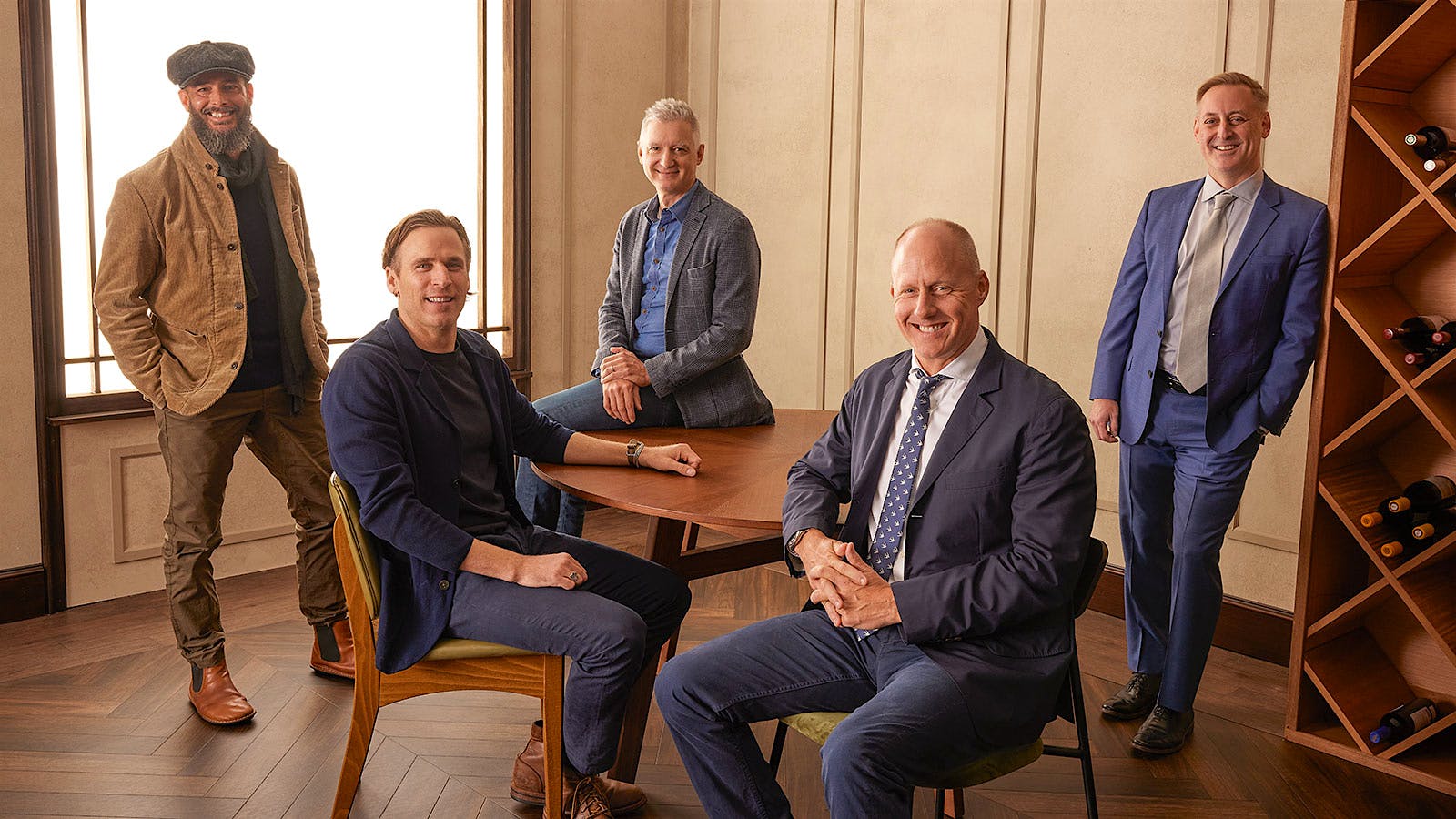
Molesworth led a conversational seminar with Matt Courtney of Ferren, Jason Jardine of Hanzell, Carlo Mondavi of RAEN and Thomas Rivers Brown of Rivers-Marie. The four acclaimed winemakers detailed their experiences finding vineyards, farming and making wine over the past two decades and, most importantly, learning and improving.
“It’s abundantly clear, the quality of Pinot is now on par with Napa Cabernet, and this is no longer a trend; this is an established category,” said Molesworth, pointing to 2021 as a benchmark vintage. Each of the four wines poured was from that year and showcased different areas of Sonoma.

Presenting the Ferren Pinot Noir Sonoma Coast Silver Eagle Vineyard 2021 (one of two wines at the seminar not yet reviewed, giving attendees a sneak peak), Courtney was first to discuss what has been a prolonged learning curve for Pinot Noir winemakers. He referenced acclaimed winemaker Tony Soter, who was on the Wine Experience stage just beforehand, noting that even someone like him, who has more experience than anyone, still only has one shot each year to experiment and adjust. “Despite the slow learning curve, we have seen Pinot Noir really progress,” said Courtney, adding, “We’re making the wines that much more complex and much more deep, even at more moderate Brix levels. Across the board, the quality of Pinot is going up and up.”
Molesworth asked Mondavi and Brown what they had seen 10 and 20 years ago, respectively, when it came to finding vineyards for Pinot Noir. Mondavi, who farms 20 acres along the Sonoma Coast, recalled meeting with Greg Bjornstad, who planted Flowers Estate Vineyard and other noteworthy vineyards. “He said, ‘Carlo, good luck finding a site out here [in Fort Ross-Seaview and Occidental].” Mondavi said Bob Cabral, then of Williams Selyem, took him under his wing and they explored vineyards together. “He led us to the Fort Ross-Seaview, where we have Sea Field. It was a long journey and [we were] fortunate to find the holdings.”
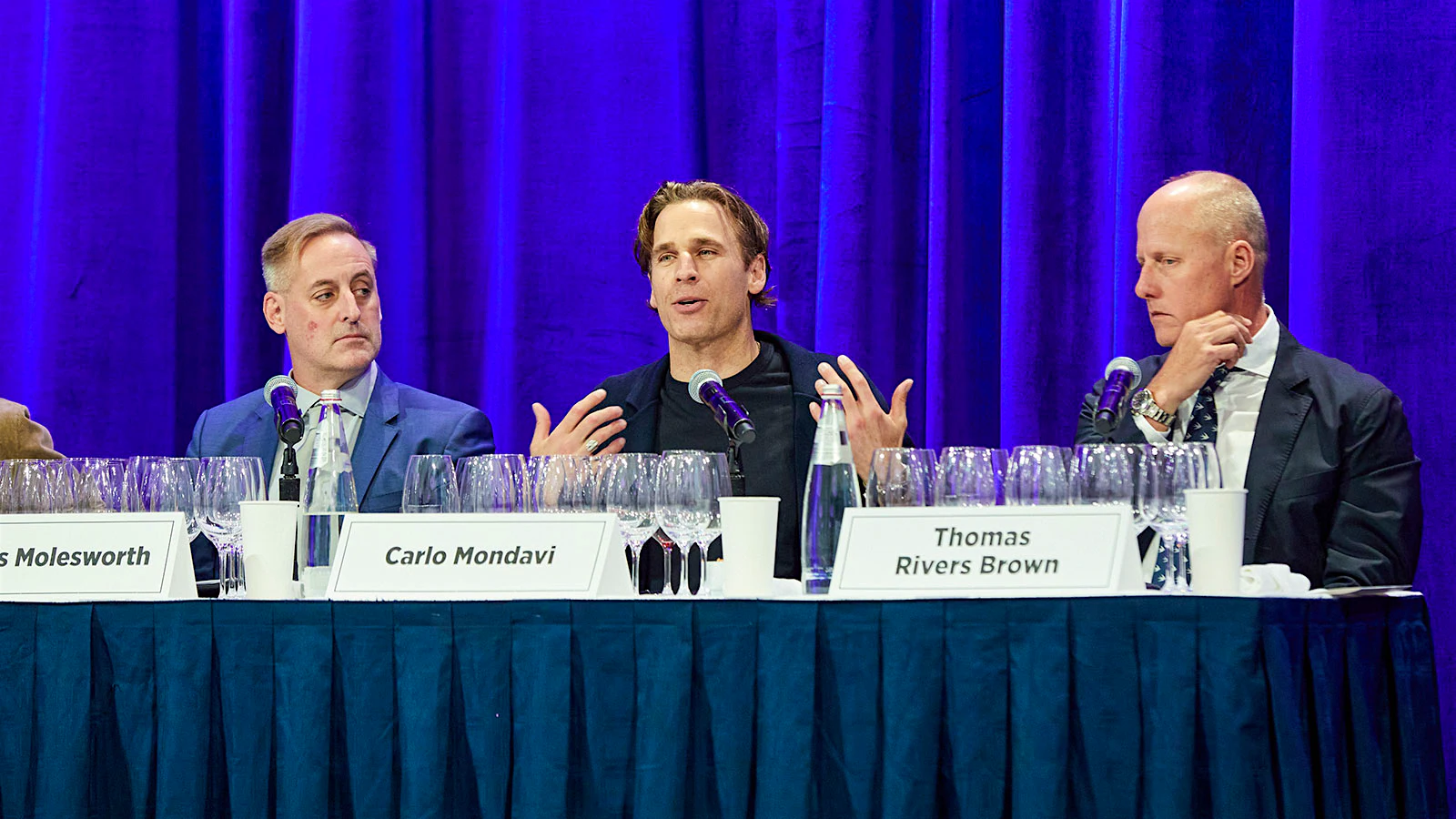
Mondavi poured the RAEN Pinot Noir Sonoma Coast Royal St. Robert Cuvée 2021 (95 points, $70); one specific block of his Bodega Vineyard in Freestone-Occidental makes up the backbone of the wine, with additional grapes sourced from other select parcels from that same vineyard and from Sea Field Vineyard in Fort Ross-Seaview.
Jumping back another decade, Brown recalled meeting with Wine Spectator editor emeritus Jim Laube and vintner Fred Schrader in the early 1990s (before Brown started working with Schrader). Expecting the true Sonoma Coast to be the next big thing, they amassed a collection of representative bottlings and began tasting. “We tasted the wines, and we were struggling to find good things to say about them,” Brown said. “We wanted to believe it was the next big thing. But they were disjointed. The style was undetermined; you could tell the farming wasn’t great. You could see the future was coming, but we hadn’t quite gotten there yet.”

Brown fortuitously met grower Scott Zeller in 1999 while at Turley. Zeller was delivering a half-ton of grapes for then-winemaker Ehren Jordan, but Jordan wasn’t there. “I was able to make the connection, and Scott and I stayed in touch, and that’s basically how Rivers-Marie started with Pinot.” Brown poured the latest bottling of that wine, the Rivers-Marie Pinot Noir Sonoma Coast Summa Old Vines 2021 (96, $90).
A winery that already had decades of experience farming old vines is Hanzell, whose vines date back as far as 1953. Jardine presented the Hanzell Pinot Noir Moon Mountain District 2021, which combines grapes from those old vines with those from other plantings, many of which were grafted from the original 1953 block. When Jardine took over in 2014, he thought there was a better way to farm. He spearheaded a transformation to regenerative farming practices, incorporating permanent cover crops and sheep, ducks and other animals on the estate. “We have to accept the fact that we’re a monoculture. But the way that nature creates and sustains fertility is by diversification,” said Jardine. “I want to create fertility and regenerate our soil biology … Part of why I’m so hyper-focused on preserving life and longevity is that I want the next generation of Hanzell to thrive and steward these old vines.”

Molesworth also polled the winemakers on whether Pinot Noir wineries have gone too far with the single-vineyard approach. Courtney quickly pointed out that consumers might be confused by the number of vineyards, but it’s not that much of a downside: “We care very much about where these wines come from, and so putting the name on the bottle communicates that passion. What’s on display here is the site, not so much the winemaking.”
Brown closed the seminar, emphasizing a recent string of excellent vintages and more to come: “We’re seeing the Sonoma Coast now at 20-, 23-, 35-, 45-year-old vines, and the wines have taken dramatic qualitative leaps. So, I can only imagine 20 to 30 years from now how great these wines are going to be. We’re entering this really special period. The best is yet to come.”