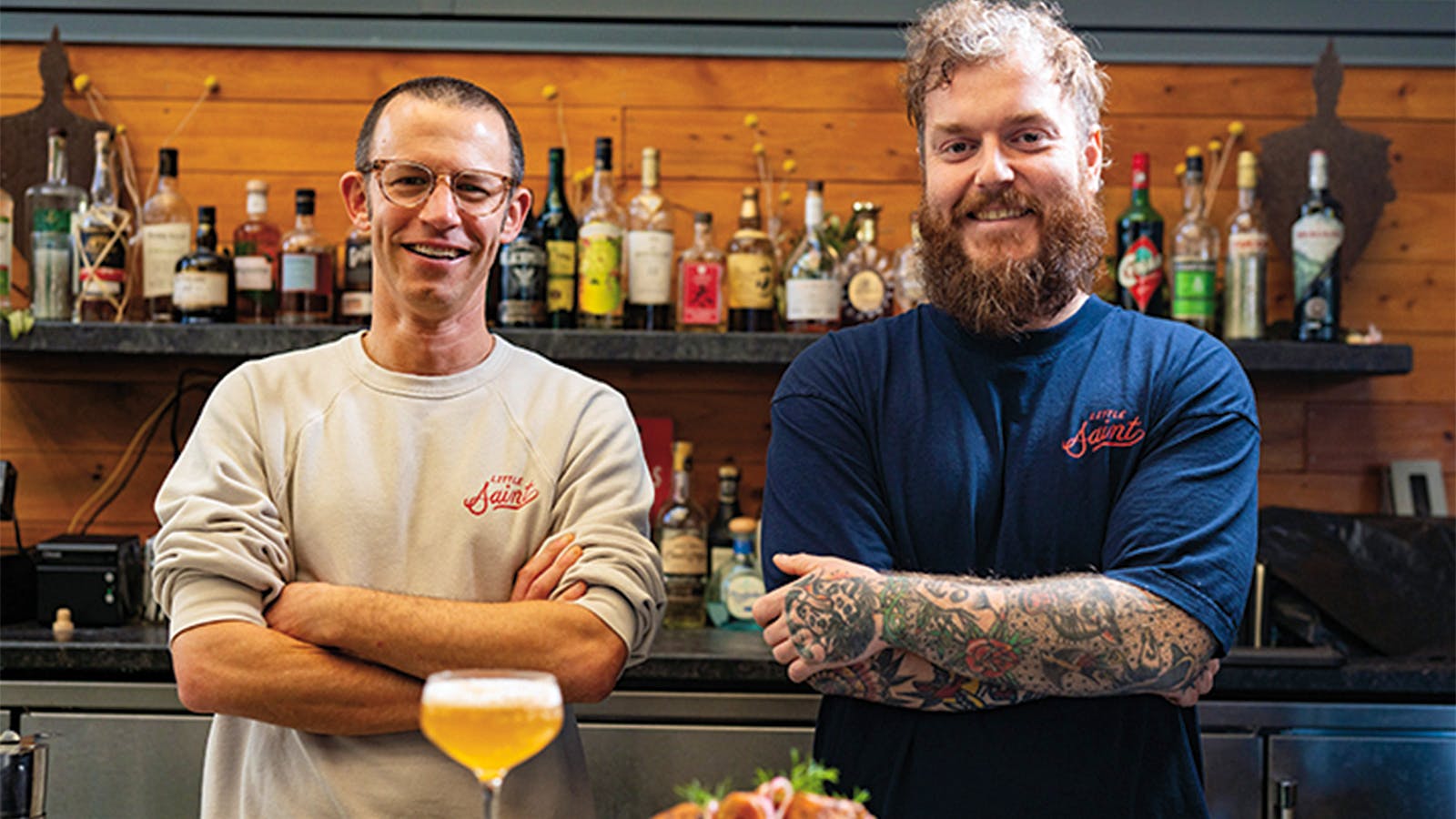


Reducing and reusing food scraps at home starts with being intentional, says Matthew Seigel, executive director of beverage and sustainability at Little Saint, a Wine Spectator Best of Award of Excellence winner rooted in plant-based, farm-to-table fare in Healdsburg, Calif. “You have to switch your mindset. Rather than thinking of stems and stalks as extra parts, think about how to utilize them. Be experimental and make it a fun process so that you want to do it again,” he says.
Little Saint is part of a growing trend of restaurants striving for a closed-loop food system. Closed loops fundamentally aim to eliminate food waste by finding constructive reuses or repurposing of an ingredient and, in the end, composting whatever can’t be used. “At the restaurant, we’re constantly looking at how many times we can use something, whether using until totality or until it’s gone through the wringer and we can now compost it,” says Seigel.
While restaurants often have staff and resources to manage food waste, Seigel believes the approach is adaptable for home cooks; it just takes forward thinking. “Some people hesitate, but it’s important to take your time. These are easy things to do without feeling intimidated,” he says. Many of the food leftovers you’re tossing are edible or reusable, including things you might not think of, and there’s a world of creative culinary applications for nearly every scrap. There’s the potential to save money while simultaneously benefiting the environment, as decreasing food waste destined for landfills reduces methane emissions and your carbon footprint.
Seigel, along with Little Saint executive chef Stu Stalker, zeroes in on a few everyday items found in most kitchens, offering tips for reusing them in various manners. Coffee grounds, for example, which have long been a well-known natural fertilizer for plants, can also be used in culinary preparations. “There’s still so much flavor [in the grounds], you can dehydrate them and turn them into a rub,” says Seigel, noting that if you happen to brew too much coffee, you can use that too, including using it to make a liqueur.
Stalker says he particularly enjoys reworking citrus and carrots. A simple hack, he says, is to puree steamed carrot scraps and mix them into a pre-made miso, which you can then use for flavoring soups or curing vegetables (or meat). If you buy carrots with the tops still attached, Stalker suggests grilling just the greens and dressing them with a bit of salt, lemon juice, olive oil and garlic. If you’re feeling adventurous, Seigel says, make tepache, a fermented beverage typically made from the peel and rind of pineapples, but for which carrots also work well.
As for citrus: “If you like juicing, you can use the [leftover] peels to infuse into an oil or a spirit of choice,” Stalker says. His advice is that before sending the citrus through the juicer, you should zest it and save it for various uses, like salts and sugars. “And whatever the pulp is, use it,” adds Seigel, noting that leftover pulp is great for adding to smoothies, flavoring granola or making a quick lemonade by blending it and then straining the liquid from the solids.
Even for the unadventurous home cook, Seigel says saved skins, tops and bottoms from things like onions, carrots, celery and mushrooms are perfect for turning into vegetable stock and an excellent place to start when it comes to saving scraps: “It’s super easy; all you need to add is water, and you basically won’t ever have to buy veggie stock.”
Recipes
Below are instructions to make a tequila cocktail and a savory dish that demonstrate the philosophy at work, taking whole carrots to start with and using greens, tops and peels in different manners to limit waste.

“Skin”-y Marg Cocktail
- ½ ounce orange liqueur (such as Cointreau)
- ¼ ounce Contratto aperitivo (Italian bitter liqueur)
- ¼ ounce agave nectar
- ½ ounce Uruapan Charanda (Mexican rum)
- ¾ ounce herbal tea or lemon balm tisane (leaves/stems steeped in hot water)
- ¾ ounce lime juice
- 1 ½ ounces Carrot Skin Tequila (recipe below)
- Carrot Tequila Salt for garnish (see below)
Carrot Skin Tequila
- 375 grams carrot skins and tops
- 1 750ml bottle blanco tequila
- Kosher salt
1. Choose a large vessel that can be closed with a lid and place it on a kitchen scale. With the vessel on the scale, tare the scale (setting the weight to zero), then add carrot tops and peels, making note of the weight in grams.
2. Add double that amount in blanco tequila (Little Saint uses Casco Viejo). Save the tequila bottle. Let steep at room temperature for 24 hours with lid on.
3. Strain Carrot Skin Tequila through a coffee filter back into the original tequila bottle. Reserve the strained tequila-soaked carrot peels; throw the tops into the compost. (After doing an infusion, it is ideal to keep the infused spirit in the refrigerator.)
Carrot Tequila Salt
1. Dehydrate the tequila-soaked carrot peels in a dehydrator at 130° F for 24 hours.
2. Once done, pulse the dehydrated carrot peels in a spice grinder until you achieve your desired texture (coarse or fine).
Note: If you want to make the salt booze-free, simply put aside some carrot peels before you steep them in the tequila, then dehydrate them at the same temperature for 4 to 6 hours.
3. Weigh the carrot powder and add an equal weight of kosher salt. Use Carrot Tequila Salt to rim your cocktail glass or to cook with.
Make the Cocktail
Add all ingredients (except salt) to a shaker. Add ice and shake. Strain into a coupe that has been half-rimmed with Carrot Tequila Salt. Garnish with half an orange wheel (fresh or dehydrated).

Carrot Lox Toast Recipe
Carrot Lox
- ⅓ cup maple syrup
- 3 tablespoons gluten-free tamari
- 2 teaspoons ground black pepper
- 1 teaspoon liquid smoke
- 2 bay leaves
- 6 large carrots (with greens attached)
- 3 tablespoons kosher salt
1. Preheat oven to 375° F. Remove carrot greens and clean thoroughly in cold water. Dry greens on a paper towel and reserve.
2. Wash and peel the carrots. (Save peels for other preparations.) Cut the carrots into 4- to 5-inch lengths, lightly season with kosher salt and roast in the oven for approximately 45 minutes or until fork tender.
3. While the carrots are in the oven, combine the maple syrup, tamari, molasses, black pepper and bay leaves in a bowl until evenly distributed.
4. Submerge the cooked carrots in the marinade for 12 to 24 hours in the refrigerator. After the lox has sufficiently marinated and before serving, slice it into thin planks using a mandolin or sharp knife.
Everything Spice
- 2 tablespoons whole caraway seeds
- 2 tablespoons toasted sesame seeds
- 2 tablespoons poppy seeds
- 1 teaspoon garlic powder
- 1 teaspoon flaky sea salt
Combine all ingredients and reserve in an airtight container
For Assembly
- 4 to 6 slices of sourdough bread, cut 1.5 to 2 inches thick and toasted
- ⅓ cup plant-based (or dairy) cream cheese
- Carrot Lox (recipe above)
- 3 tablespoons capers
- ⅓ cup pickled red onion slices
- ½ bunch fresh dill fronds
- Sautéed carrot greens
- Everything Spice (recipe above)
1. Quickly sauté greens in a hot skillet with a little olive oil. Season with salt and lemon juice. Reserve on a paper towel until ready to serve.
2. Smear the toast with cream cheese and top with a healthy portion of sliced Carrot Lox.
3. Scatter capers, pickled onions, dill fronds and sautéed carrot greens over the top and finish with a generous sprinkle of Everything Spice.
Tools & Tips
Stalker says a dehydrator and a juicer are the two most basic household accessories to help with reuse projects. “Tabletop dehydrators aren’t expensive. All you need is a dry heat and a fan, which even some air fryers have,” he explains.
Recognizing that it might take some time for a home chef to save up enough scraps to reuse, he recommends stashing them in the freezer until you have accumulated a sufficient amount to turn them into something. “You’re not going to get 100 percent back what you want if you don’t invest time, so make sure you have enough saved up before starting,” he explains.