

The Piedmont producer Ceretto added to its hospitality portfolio with Le Brunate, a new restaurant overlooking the renowned Barolo vineyard of the same name. It’s the third restaurant from Ceretto, which also operates Wine Spectator Best of Award of Excellence winners La Piola and Piazza Duomo in Alba.
When it opened: May 5th, 2026
Roberta Ceretto, co-owner and granddaughter of founder Riccardo Ceretto, described the project to Wine Spectator as a “compromise between a wine bar and a restaurant.” An extensive selection of local wines will be offered alongside seasonal Piemontese cuisine, and a large terrace provides sweeping vistas of the vine-covered hills between the towns of La Morra and Barolo.
The Brunate vineyard is one of Piedmont’s most celebrated Menzioni Geografiche Aggiuntive, or MGAs—officially designated vineyard zones roughly analogous to Burgundy climats. The 62-acre south-facing slope is known for wines of elegance and ageability, and several other producers own portions of the vineyard.
Roots in Brunate
Riccardo’s sons, Bruno and Marcello Ceretto, purchased six hectares (around 15 acres) of Brunate in 1970 as part of a prescient acquisition of several plots that would become high-value vineyards in the area. Roberta recalls spending holidays at Brunate and picking peaches, apricots and plums grown on the land at the time. (She notes that the value of Brunate land now discourages growing anything other than vines.)
The sale included a building that would become a grappa distillery as well as an old, abandoned church. That church would become the Barolo Chapel, one of the Cerettos’ first forays into art. The family commissioned Sol LeWitt and David Tremlett to transform the building into a colorful landmark in 1999, and it lies across the street from the restaurant.
![The colorful Barolo Chapel at the Brunate vineyard]](https://mshanken.imgix.net/wso/bolt/2026-05/barolo-chapel-ceretto-brunate-turning-tables_051226_1600.jpg?auto=compress,format,&sharp=5&vib=20&q=70&w=320 320w,https://mshanken.imgix.net/wso/bolt/2026-05/barolo-chapel-ceretto-brunate-turning-tables_051226_1600.jpg?auto=compress,format,&sharp=5&vib=20&q=70&w=320 640w,https://mshanken.imgix.net/wso/bolt/2026-05/barolo-chapel-ceretto-brunate-turning-tables_051226_1600.jpg?auto=compress,format,&sharp=5&vib=20&q=70&w=384 768w,https://mshanken.imgix.net/wso/bolt/2026-05/barolo-chapel-ceretto-brunate-turning-tables_051226_1600.jpg?auto=compress,format,&sharp=5&vib=20&q=70&w=828 828w)
Around the same time the chapel was commissioned, the Cerettos were having a Christmas meal. Someone asked when anyone at the table had last had grappa. “None of us could remember,” Roberta said. The family shut down the distillery and began considering other options for the building.
Following the successes of La Piola and Piazza Duomo, as well as increasing tourism in the area, they decided to open a restaurant. It took years of development as the family navigated permitting laws—the area is a UNESCO World Heritage Site—as well as their own internal deliberations. “Can you imagine six Italians around the table?” Roberta asked. “We cannot even have the same idea on a coffee!”
Food, Art and Wine Among the Vines
The result, finally, is a restaurant that blends food, wine and art with one of Piedmont’s best vineyards. The family states that the pace at Le Brunate “is set by the guests” and that there is an emphasis on flexibility. Visitors can stop by for a light bite and a glass of wine or make a reservation for a group and have a full meal.
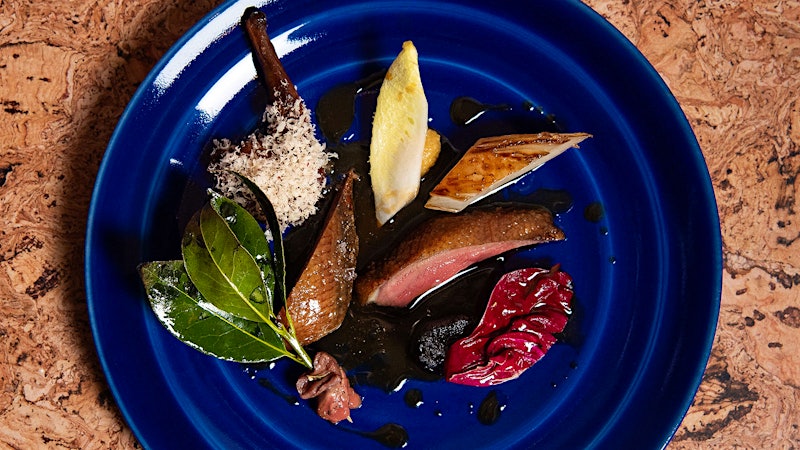
The cuisine from chef Simone Burlotto is rooted in local tradition and meant to be shareable. The opening day menu featured sweetbreads and veal jus, Fassona (a local cattle breed) beef tagliata with garden vegetables and hazelnut cremoso for dessert. The food will change frequently based on what’s in season and available locally.
The focus is above all the wine, and not just bottles from Ceretto. Over a dozen other producers of Brunate Barolo are featured on the wine list—Oddero, Francesco Rinaldi & Figli, Vietti, Damilano and more—offering wine lovers the chance to compare different expressions of the terroir that surrounds them.
Piedmont (Brunate and beyond) makes up the majority of the roughly 500 selections, but bottles from the rest of Italy, France and several other international regions are also offered.
![Kiki Smith’s “Cat’s Cradle” Mosaic at Le Brunate]](https://mshanken.imgix.net/wso/bolt/2026-05/cats-cradle-kiki-smith-ceretto-brunate-turning-tables_051226_1600.jpg?auto=compress,format,&sharp=5&vib=20&q=70&w=320 320w,https://mshanken.imgix.net/wso/bolt/2026-05/cats-cradle-kiki-smith-ceretto-brunate-turning-tables_051226_1600.jpg?auto=compress,format,&sharp=5&vib=20&q=70&w=320 640w,https://mshanken.imgix.net/wso/bolt/2026-05/cats-cradle-kiki-smith-ceretto-brunate-turning-tables_051226_1600.jpg?auto=compress,format,&sharp=5&vib=20&q=70&w=384 768w,https://mshanken.imgix.net/wso/bolt/2026-05/cats-cradle-kiki-smith-ceretto-brunate-turning-tables_051226_1600.jpg?auto=compress,format,&sharp=5&vib=20&q=70&w=828 828w)
For Roberta, art is “something that distinguishes the Ceretto family—I speak more about art than wine.” The family’s wineries and restaurants feature art prominently.
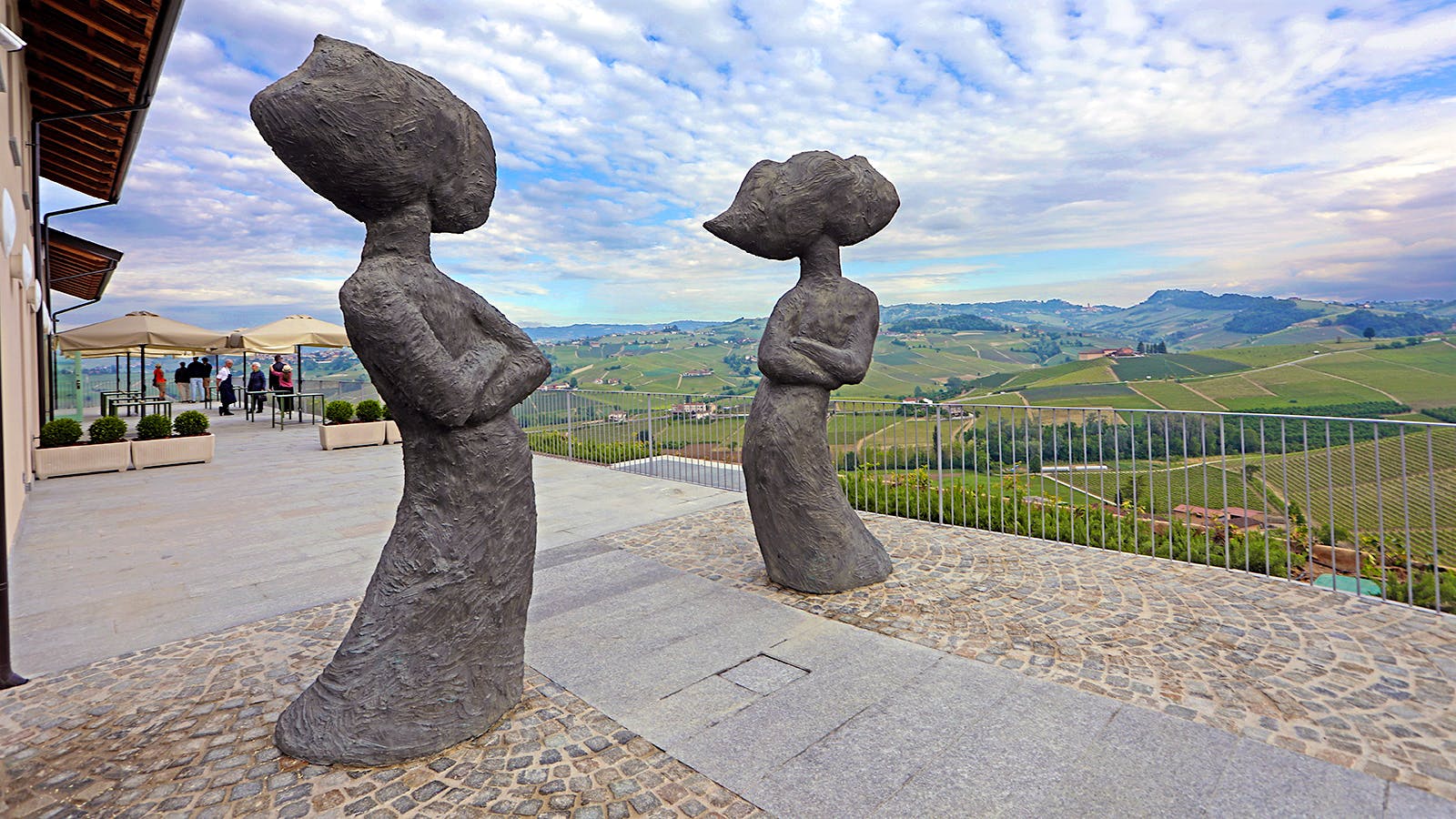
At Le Brunate, this includes a cool-toned mosaic of blue hands by American artist Kiki Smith on an outside wall, a sculpture installation by Brazilian artist Saint Clair Cemin inside the restaurant and two large bronze figures by Francesco Clemente gracing the terrace.
Of the art, Roberta explains, “At the end of the day, you are just trying to add something beautiful to something that is already very beautiful, because the vineyards in the Langhe are wonderful.”
Le Brunate is open from 11:30 a.m.–7 p.m. every day except Thursdays. Reservations are recommended.
Website: https://www.lebrunate.com/
Email: booking@lebrunate.com
The Barolo Chapel is temporarily inaccessible due to ongoing work; it is slated to reopen in early 2027.