

“Art” is a term thrown around a lot in the wine world.
Is wine art? Why the art exhibitions in wineries? And how come so many performing artists attach their names to wine?
For me, the pinnacle of the art-wine fusion is Montalcino’s Castello Romitorio—a 40-year-old estate founded by one of my art heroes.
I first became aware of Sandro Chia in New York in the 1980s when his very human, bold paintings were part of the young Italian Transavanguardia movement. Chia was rocketing to art stardom with shows at the Guggenheim and the Met. He even painted a 128-foot-long canvas mural of the Palio—Siena’s centuries-old horse race—to cover the walls of Palio Bar on West 51st St. (More than 20 years later, the property owner removed the murals to keep in a private collection as Le Bernardin expanded into the space.)
What I didn’t know is that, in 1984, Chia, a Tuscan native, bought a hilltop ruin of a 1,000-year-old castle outside Montalcino—paying for it mostly by giving paintings to the former owner, the Roman gallerist Giorgio Franchetti.

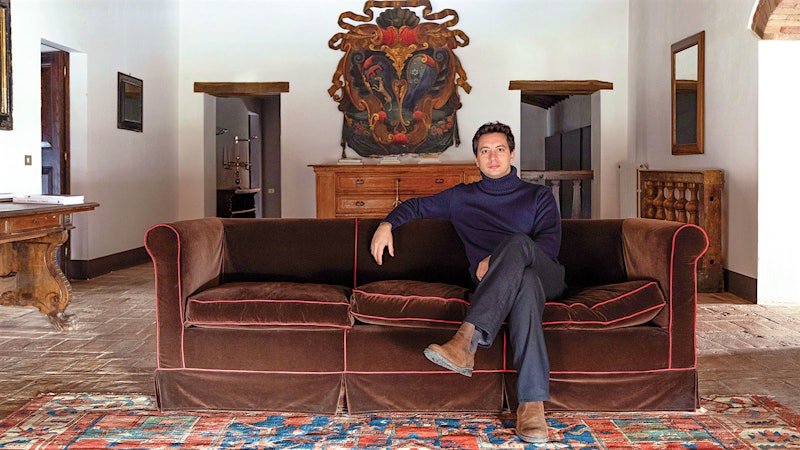
“My dad thought it would be a great place for a studio,” says the artist’s son, Filippo Chia, 42, who has overseen Romitorio for the last 20 years. “It was built for battle, but when he looked out those little windows onto an enormous valley, it was an inspiration for him.”
Chia used the money from his Palio mural to make the castle livable. He also replanted a small Sangiovese vineyard, then planted more vineyards with the help of his neighbor, Franco Martini of Casanova dei Martini. (The Martini estate, sold in the 1990s, is now called Corte Pavone and is part of Loacker Wine Estates.) In 1987, while Chia waited for his young vineyards to mature, he rented a vineyard from Martini and produced his first Romitorio Brunello di Montalcino in a cramped castle cellar.
In the beginning, wine was a creative hobby for him; the bottles were destined for family, friends and a few favorite restaurants.
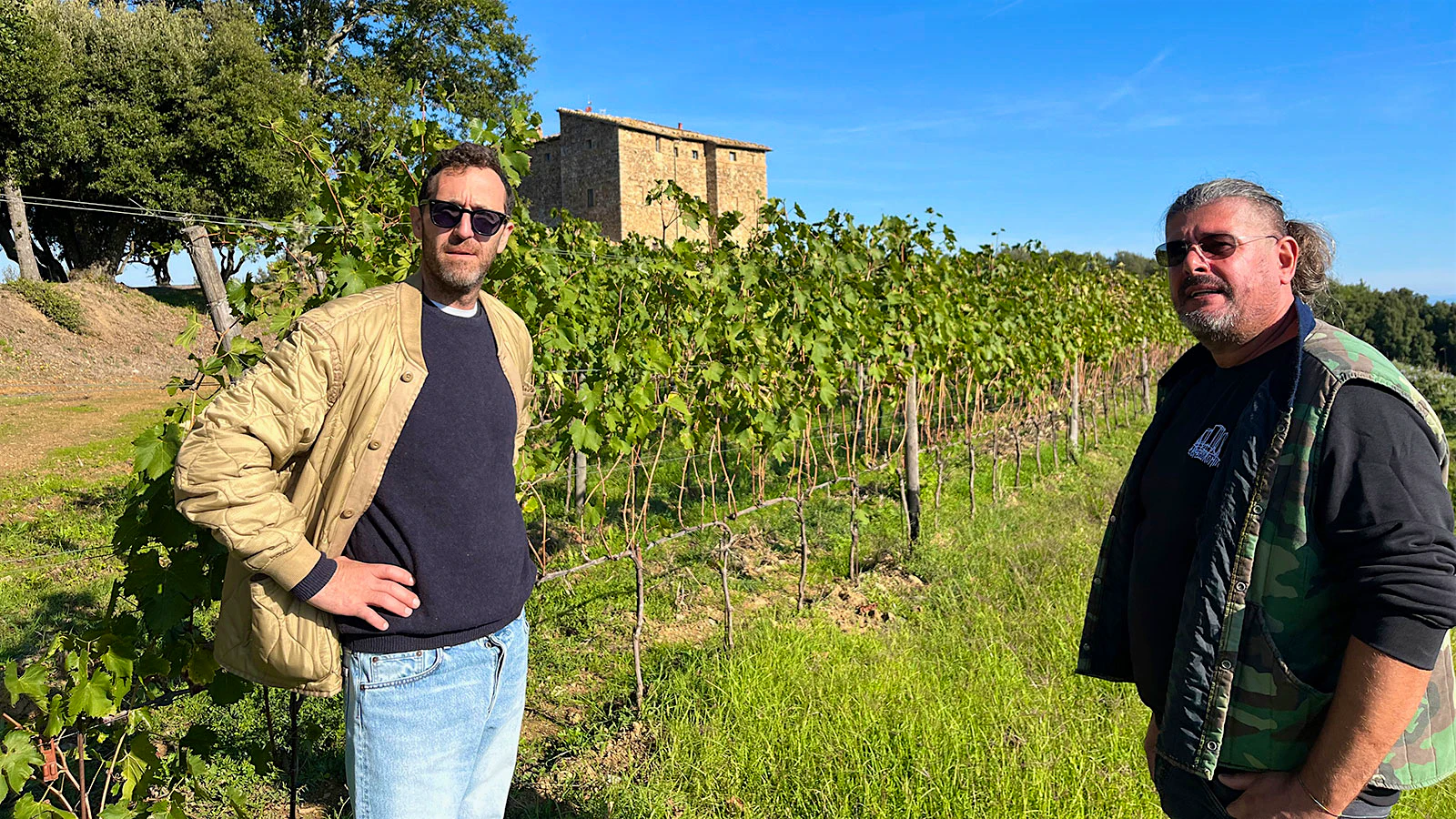
But in this century, Filippo Chia—working with Franco Martini’s son Stefano and renowned consulting enologist Carlo Ferrini of Montalcino’s Podere Giodo—has transformed it into a reliably stellar estate. Today Castello Romitorio produces 11 wines, totaling about 16,000 cases a year, from more than 40 acres of organic vineyards in Montalcino and another 45 in coastal Tuscany’s Maremma.
Brunello di Montalcino is, naturally, the star. Romitorio’s sleek Brunello, labeled with a detail of Sandro Chia’s Palio mural, broke into Wine Spectator’s Top 100 last year with the 2019 vintage (97 points, $83). On Oct. 17, Filippo Chia will discuss Montalcino’s outstanding 2020 vintage at the New York Wine Experience as part of a panel led by senior editor Bruce Sanderson.
A couple of weeks ago, I toured Romitorio with Filippo, who was born and raised in downtown New York City; he turned vintner after finishing his film school studies at New York University.

Filippo grew up spending summers with his father here. In 2005, he says, “I came to work with Stefano and my dad, and we all kind of decided we needed to take things to the next level.”
“The place needed a full-time person,” Filippo says and repeats his favorite adage: “Where energy goes, energy flows.”
Filippo threw himself into Romitorio, making wines in a new cellar built into a bluff below the castle. Over time, he has expanded the line of wines and more than doubled vineyard area and production.
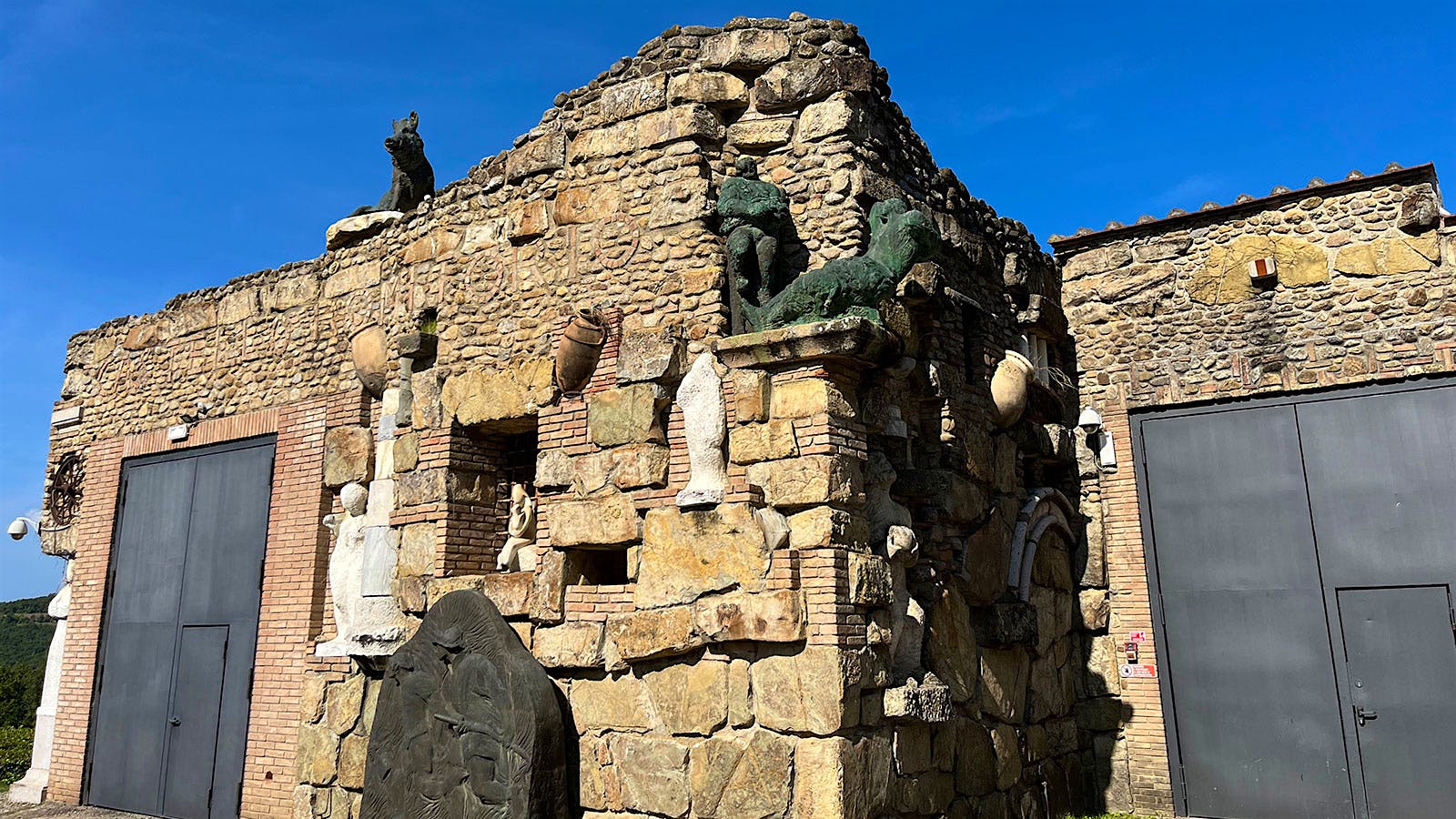
The look of Romitorio’s winery is, from the outside, eccentrically artistic. The façade of the modern building looks centuries old, with a stone-and-brick wall that’s a kind of a sculptural collage. Inset in the wall are niches with weathered-looking or half-formed vaguely human figures in stone and bronze. Topping the wall is a bronze wild boar that looks like it just wandered by. Inside, the winery and tasting room are populated by Chia’s life-size human and mythical bronzes.

At the wheel of his truck, bumping along forest roads between vineyards, Filippo speaks of his viticulture in terms of photography or film.
“Now especially with climate change, it’s all about diagonals and light. It’s like understanding how light works in composition,” he says. He is tall and bearded and speaks English with a distinct New York accent.
“Sangiovese is like Caravaggio—it’s chiaroscuro. It really expresses the light and shadow of the vineyards,” he says. “Then comes the human factor: the clones, the planting, the harvest, the macerations, the aging. It’s all about light and dark and where you want to arrive.”

Romitorio’s Brunello vineyards are at high altitudes, up to about 1,600 feet, where they face northeast and catch mostly morning light—an exposition that gives the wine a cooler, elegant feel and a lighter color.
With the 2010 vintage, Filippo introduced a Brunello cru, called Filo di Seta, from Romitorio’s warmest, lowest-altitude vineyard (at less than 700 feet), which is exposed to intense afternoon sun. “It was a no-brainer to bottle it by itself,” he says. “The wines from here are more potent, darker.”
In some years, the winery also produces a riserva bottling of its flagship Brunello and Filo di Seta.

In contrast to Romitorio, Chia’s Tenuta Ghiaccio Forte estate sits about about one and half hours to the southwest, in Scansano. Here, about 10 miles inland from the Tuscan coast, in the Maremma, are open vineyards with a southern exposure.
And here, Sandro Chia, at 79 and slowed by age, quietly spends most of his time. Very much a white-bearded art maestro, Chia’s mind is not only lucid but poetic.
When I ask him why he got into wine, he says, “Like many things in my life, it was random. The vineyard was a symbol of connection between art and mythology. There was no contradiction between being an artist producing paintings and sculpture and producing grapes and ultimately wine.”
“It was a way of opening your consciousness,” he adds.

That last sentence sinks in. I wish more vintners thought like that—and like Chia’s words that follow.
Over 40 years, Chia has witnessed and been part of Italy’s wine renaissance, though he laments that “wine has become a bit too rational, too professional, too organized.”
“But still,” he goes on, “wine is like poker. Every hand (like every vintage) has new cards, but the rules are the same. When you lose, you lose. And when you win, it’s a big feast with the god of ecstasy, Bacchus, dancing naked in the countryside.”