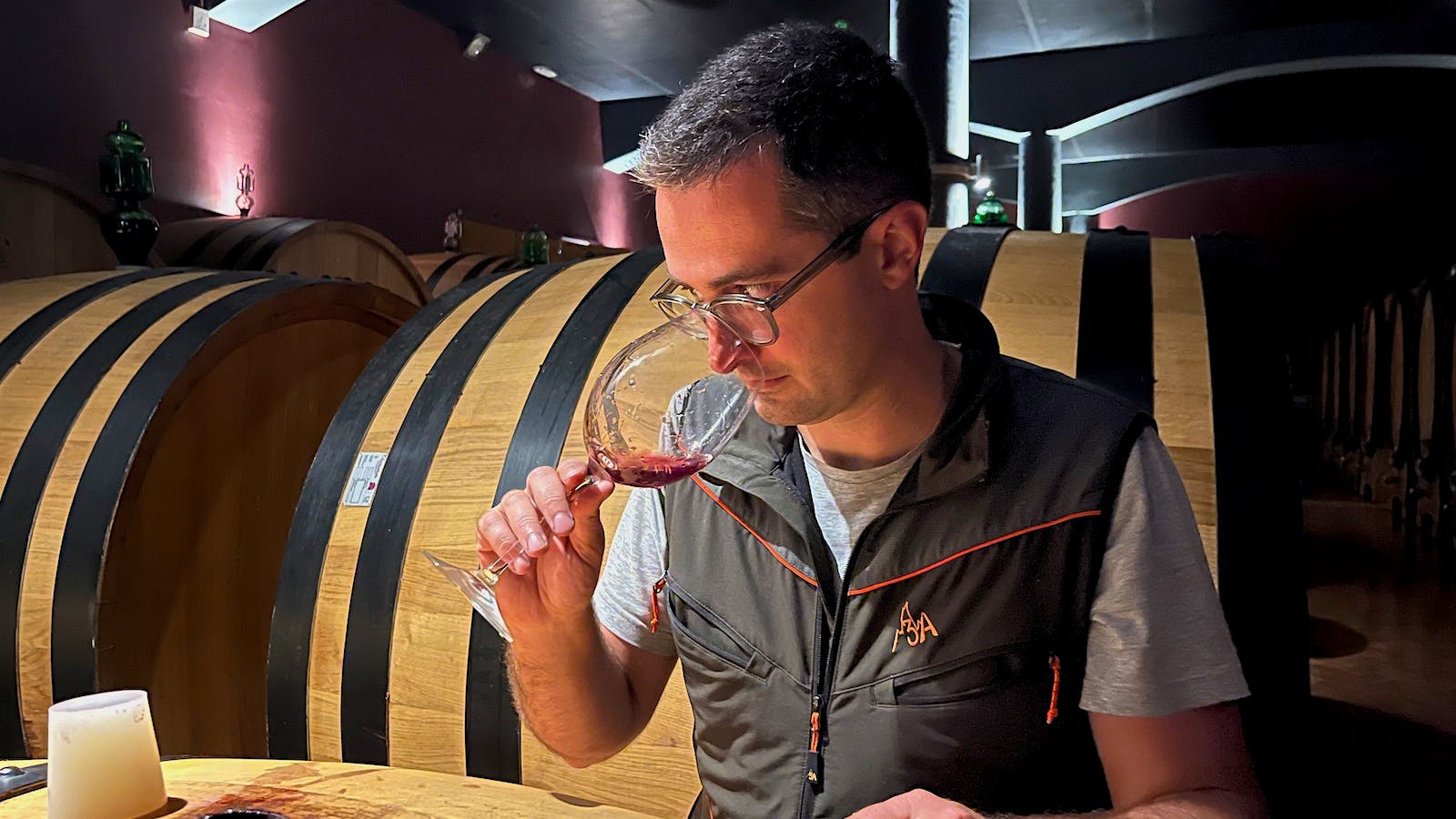


Giacomo Bartolommei is a rarity in the elite Tuscan wine world of Montalcino, which is dominated by outsiders and enologists.
His family of hands-on farmers owns Caprili, where he is their own hands-on winemaker. At 34, he already has 10 years of experience under his belt. His elegant and complex 2019 Brunello di Montalcino (96 points, $65) ranked number 15 in Wine Spectator’s Top 100 of 2024.
As if all that weren’t enough, in June, he was elected the youngest president ever of the Brunello di Montalcino consortium, which represents the area’s more than 200 producers. That makes him the Millennial face and hope of one of Italy’s most prestigious wine appellations.
“The image of Brunello can be a little dusty,” he reflects one evening at the end of harvest at the estate. “Brunello is still a wine for people who are over 50. We are not seeing people under 50 much interested in it. This is the challenge.”
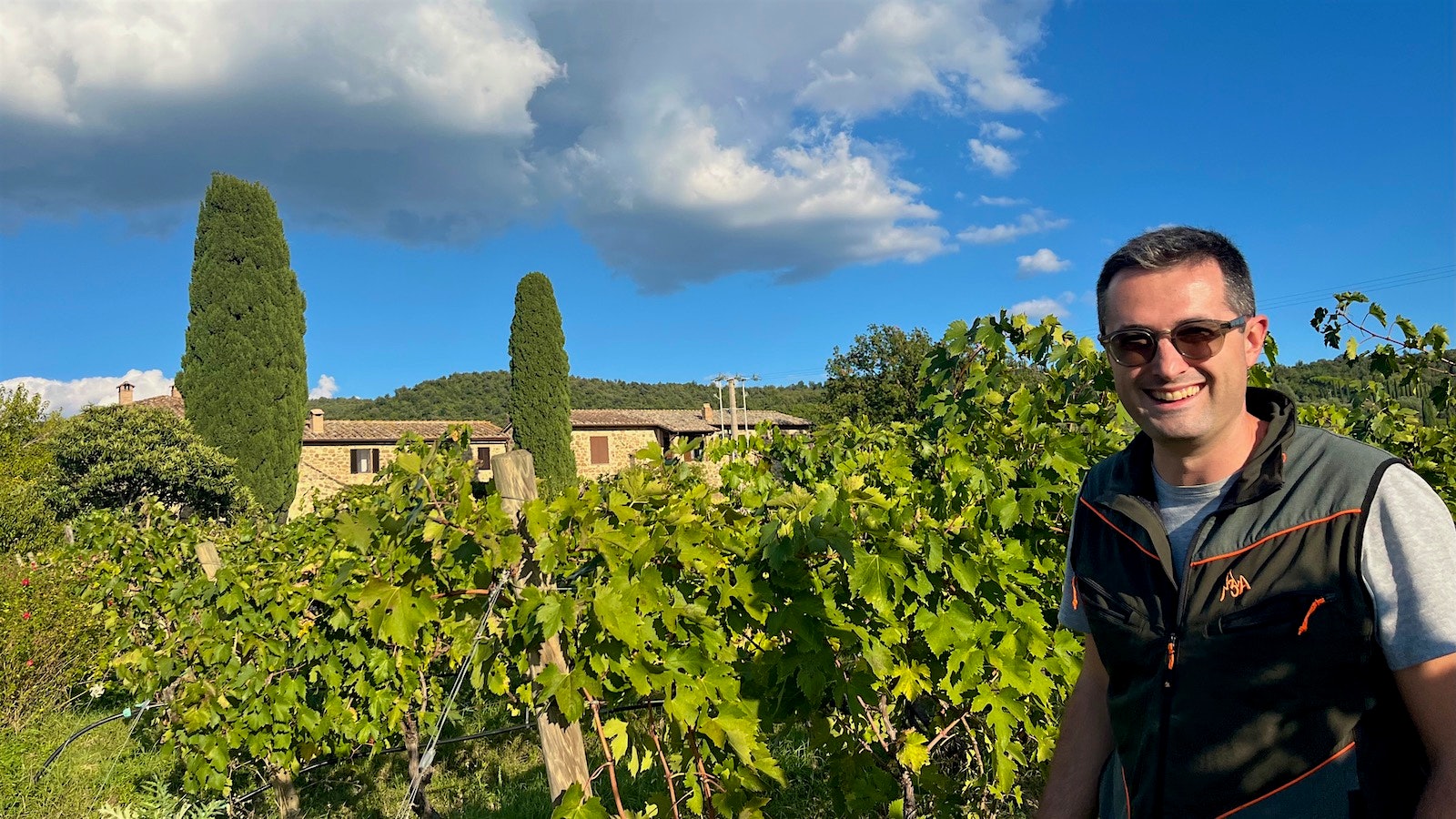
So, how does Bartolommei, who also manages Caprili’s exports, propose to attract younger drinkers to Montalcino wines?
As the market for some collectible wines fades, Bartolommei says the consortium, its partners and sommeliers need to communicate that Brunellos can be drunk in the first years after release, even though they age well. Beyond that, he says, Montalcino needs to promote Rosso di Montalcino, often seen as a kind of minor-league wine or “Baby Brunello.”
Though both wines are made from Sangiovese, Brunello spends at least five years maturing after harvest—at least two of those years in wood barrels—before release. Rosso, on the other hand, can be released the year after harvest in September. As a result, Rosso costs a fraction of Brunello, and its alcohol level is typically slightly lower.
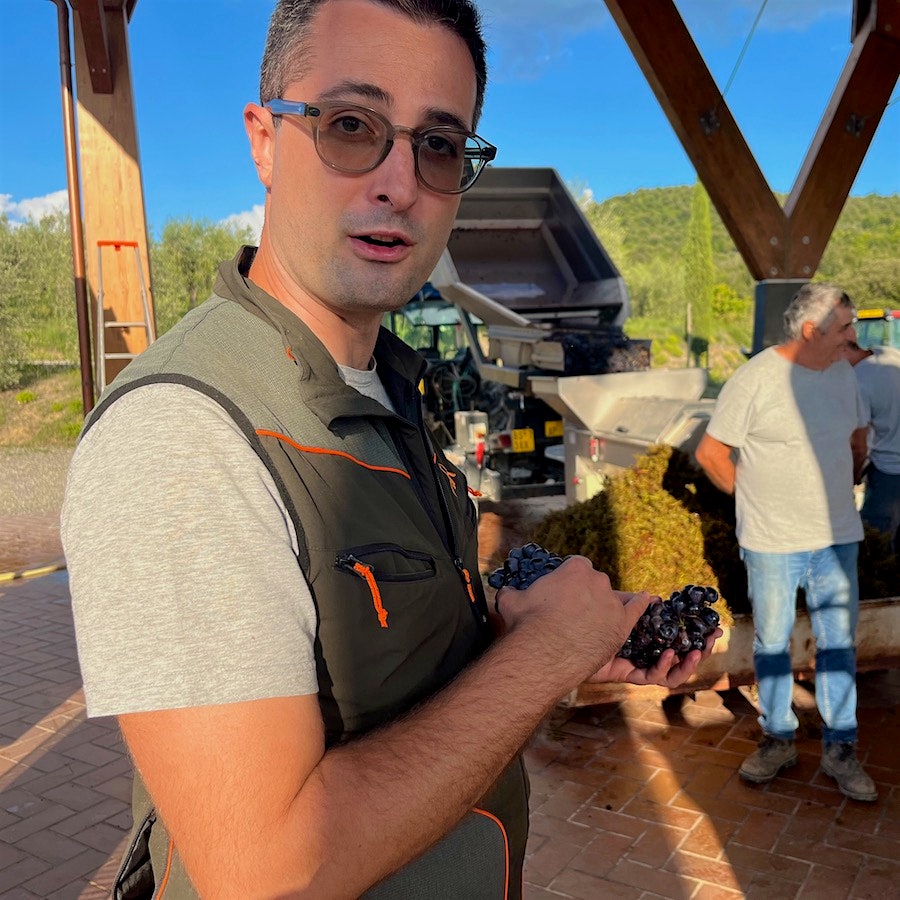
“It’s a younger wine that’s more drinkable and the average [retail] price is about 30 bucks,” he says. “We think it’s a way to reintroduce Montalcino.”
Rosso need not be a lesser wine, insists Bartolommei and other likeminded producers. In 2016, when Bartolommei took over winemaking from his uncle, he began applying extra care to Caprili’s Rosso. (That 2016 vintage scored 92 points and only retailed for $22).
“I changed it from being the little brother of Brunello to a wine with its own identity,” says Caprili, who studied viticulture in high school and economics at university.
The Evolution of Caprili
The Bartolommei family has prospered in Montalcino with a rare family harmony and good instincts. In the early 20th century, the Bartolommei were sharecroppers cultivating livestock, grain and grapes. With the end of that mezzadria system in Italy, the Bartolommei bought Caprili in 1964. The following year, Alfio Bartolommei, Giacomo’s grandfather, planted his first vineyard with cuttings he got from his part-time employer, the historic Argiano winery in Montalcino. Two years after that, 25 producers formed the Brunello di Montalcino consortium.
For a time, the Bartolommei sold their wine in bulk as Chianti (as Montalcino overlaps with the Chianti Colli Senesi zone). Then in 1978, they produced their first Brunello vintage to be bottled. Alfio, his two sons and his daughter planted and invested as they could, while sharing the family’s sprawling farmstead. “We grew by selling wine,” Giacomo says.
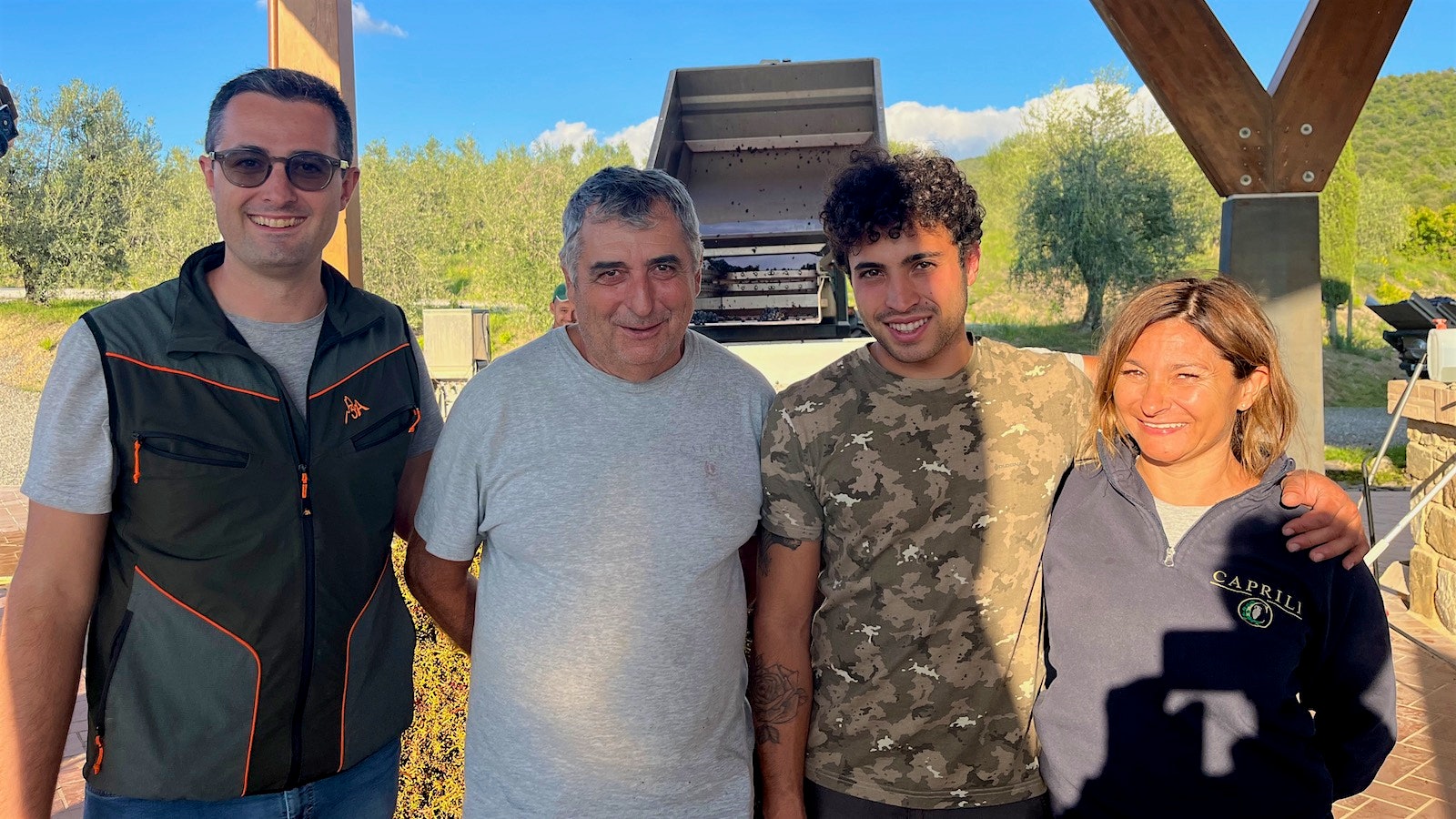
Today, Caprili encompasses more than 50 acres—about half of which are legally designated for making Brunello, with the rest going to their Rosso and a Tuscan Sangiovese blend developed by Bartolommei. The family owns another 10 acres of vineyards in Tuscany’s coastal Maremma region, partly for their white Vermentino.
Caprili remains a close family-run operation. Giacomo’s dad, Manuele, manages the vineyards with the help of Giacomo’s 22-year-old cousin Filippo. Giacomo’s aunt, Paola, runs the office.
Though Caprili’s Brunellos are stylistically traditional, Giacomo is taking steps to preserve their character. Generally hotter growing seasons mean “in the last years the grapes are more fragile,” he says. “They lose their aromas easily in the winery.”

To preserve those aromas, Bartolommei has moved to gentler vinification and reduced the amount of aging time in barrels by transitioning the wines to concrete vats. In the vineyard, he and Filippo deployed vertical mesh screens this season to shade 2.5 acres of Brunello vines at the height of summer. “This will be our challenge of the future,” he says, “protecting the grapes from UV light.”
That evening at dinner, the conversation turns back to the decline of wine consumption among Giacomo’s generation, often in favor of cocktails. “This is the world of TikTok and Instagram Reels,” he says of the challenge in reaching new young consumers. “You have 30 seconds to a minute to reach them.”
Can wine really be marketed like sneakers? Maybe so.
I’m glad Bartolommei is working on these challenges, and I look forward to his moves. I can’t help but think that where goes Montalcino, there goes the world of vino.