

Some people hit a raw bar with one thing on their mind: Oysters, oysters, oysters. Whether enjoyed with a squeeze of lemon, a dash of Tobasco or a splash of mignonette, any way they’re served is fine—especially with a crisp glass of wine. Sound a little bit like you? Then it’s time to bring that passion to your kitchen, with these five recipes for oysters, served grilled, roasted and even fried. Paired with a refreshing white, sparkling or rosé wine that lets the shellfish shine, these recipes are low effort and high reward, showing off the versatility of these briny little morsels.
Portuguese Oysters Rockefeller
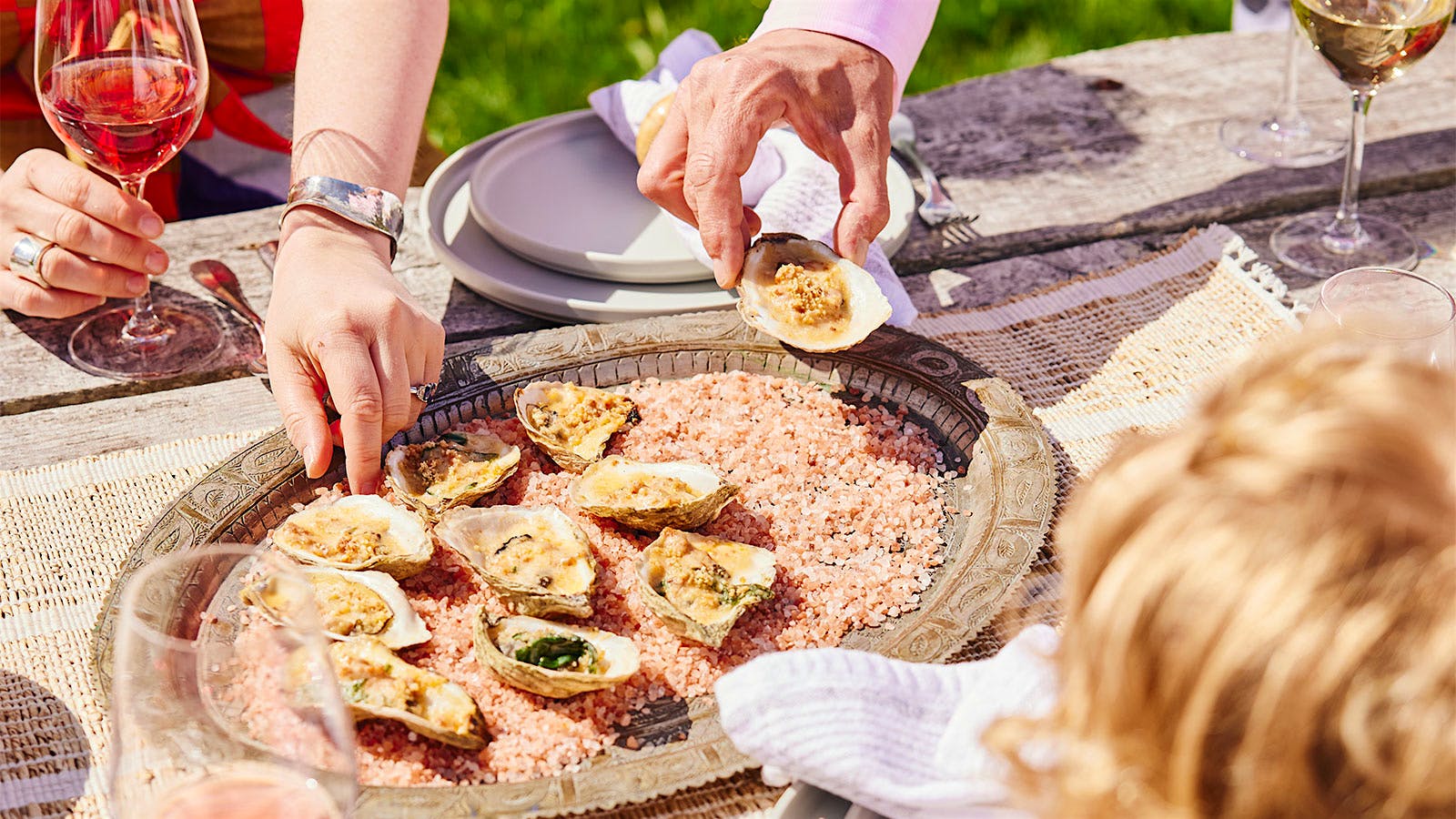
This dish plays off New Orleans’ traditional oysters Rockefeller—in which oysters on the half-shell are topped with butter, parsley and breadcrumbs (and sometimes ingredients such as spinach and diced bacon). From Rhode Island restaurants Stoneacre Garden and Stoneacre Brasserie, this Rockefeller rendition draws from Portuguese flavors, adding chouriço or Spanish chorizo and goat cheese, along with spinach leaves, before grilling. “With the chorizo and goat cheese, you get textures and flavors that are unexpected,” says restaurateur Christopher Bender. “The way it takes that little kiss of heat from the grill, it just kind of works.” Pair this dish with a rosé, particularly one made from Pinot Gris, to match the fleshiness of the oyster.
Roasted Oysters with Citrus Garlic Butter

Hailing from the Texas port city of Houston, this recipe for roasted oysters from restaurateur Ford Fry’s Award of Excellence–winning State of Grace combines butter and Parmesan cheese with furikake, a Japanese seaweed seasoning, and togarashi, a zesty chile blend. Chef Bobby Matos, now at sibling restaurant La Lucha, recommends using the compound butter as a guide to the oysters’ doneness, making sure that the butter is bubbling before moving to the next step. With all these added flavors and the weight of the butter, this dish calls for a white wine with some depth, such as Grüner Veltliner or Albariño, that can play well with the herbal, savory flavors. Read on for tips on shucking, which oysters to use for roasting, and the recipe!
Grilled Oysters with Peach Barbecue Sauce

Hog Island Oyster Co., along the shores of Tomales Bay in California, has become synonymous with the boom in West Coast oysters. From its original “shuck-your-own” picnic grounds that debuted in the 1990s, Hog Island Co. has expanded with oyster bars across northern California—including San Francisco, Napa and Larkspur (in Marin County)—and sells oysters to restaurants across the country. Doing what they do best, the Hog Island team shared two recipes for oysters: one raw with “hogwash” (a mignonette of rice vinegar, cilantro, jalepeño and lime) and another grilled and slathered in peach barbecue. “The addition of grilled or roasted peaches adds a smoky sweetness that rounds out the brine from the oyster and the vinegar in this barbecue sauce,” says chef Christopher Laramie. Try it out!
Grilled Oysters with Lemon Chile Ramp Butter

From famed chef and Top Chef head judge Tom Colicchio—the name behind restaurants such as Craft and Best of Award of Excellence winner Temple Court in New York City—these grilled oysters are elevated with Calabrian chiles, tangy preserved lemons and grassy, garlicky ramps, a type of wild onion. When he serves these oysters while entertaining at home, Coliccho pairs these bites with a Long Island white, such as Pinot Blanc, to cut through the brine and heat. Get the recipe!
Andrew Carmellini’s Little Oyster Sandwiches

If you prefer your oysters fried and on a bun, try chef Andrew Carmellini’s po’ boy–inspired crispy fried oyster sliders, which are breaded in cornmeal and doused in a pickled okra sauce, accented with mustard, capers and other spices. The owner of several New York City restaurants, including The Dutch (which this recipe originally came from) and Best of Award of Excellence winner Café Carmellini, the chef says these sliders pair well with minerally Champagnes, other crisp, clean sparkling wines and whites from the coastal Italian region of Liguria. Learn how to make this party food!
Oysters 101
When Should You Not Eat Oysters?
The best time to eat oysters depends on whether they are wild or farmed and where they were harvested. Generally speaking, wild-caught oysters are better outside of the summer months (ever heard the adage, “Only eat oysters in months with the letter R”?) for two reasons. First, wild oysters spawn when the oceans are warmer and that makes them softer and less pleasant in taste; they’ll be plumper and sweeter at other times of the year. Second, bacteria and algae levels rise along with water temperatures; since oysters are bi-valves, and survive by filtering water, it’s best to avoid wild oysters when they are more likely to pick up toxins.
Farmed oysters are typically grown in cooler waters, have access to more abundant food and don’t reproduce—so different species from different sources are available and tasty year-round. And concerns about water temperature are less relevant today than in the past due to better monitoring of water quality and better food-safety practices, including consistent refrigeration as soon as oysters are harvested.
Are Oysters Best Cooked or Eaten Raw?
They’re great either way! It all depends on your personal preference. The recipes above are for cooked oysters—cooked over the grill, in the oven or deep fried—but raw oysters are delicious dressed with mignonettes, lemon juice, hot sauce and other accompaniments.
What Do Oysters Taste Like?
Oysters’ taste can differ based on the species and on the waters from which they are harvested—their merroir, similar to terroir, determined by water conditions, location and depth. Some are more savory, while others have a hint of sweetness; they can be vegetal, earthy, minerally or even have floral or fruity notes, but generally great oysters will have a fresh, briny taste. Different oysters will also vary in texture, some meatier and plumper, others creamier and more delicate.
What Wines Should I Pair with Oysters?
To pair with raw oysters, turn to light-to-medium, bright, acidic white wines like Muscadet, Sauvignon Blanc, Pinot Gris, Pinot Blanc, Chablis, dry Chenin Blanc, Albariño, coastal Italian whites and sparkling wines like Champagne. Cooked oysters can stand up to fuller versions of these varieties, along with wines such as Grüner Veltliner and Bordeaux whites. Crisp rosés, particularly those from Provence in Southern France or those made from Pinot Noir, are also a good choice.