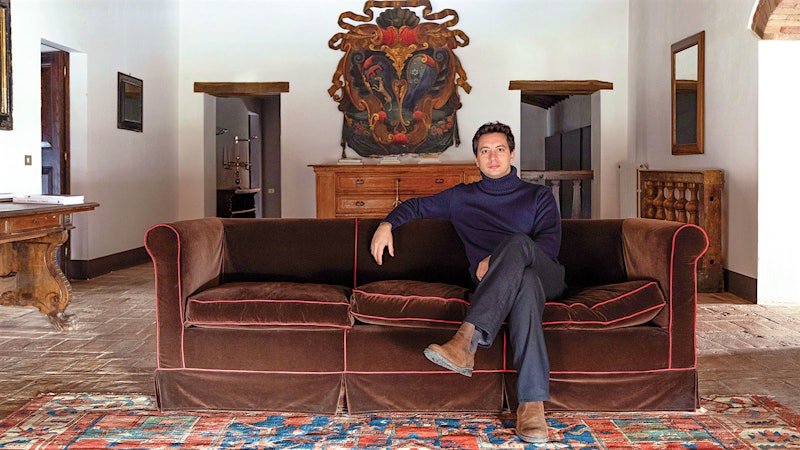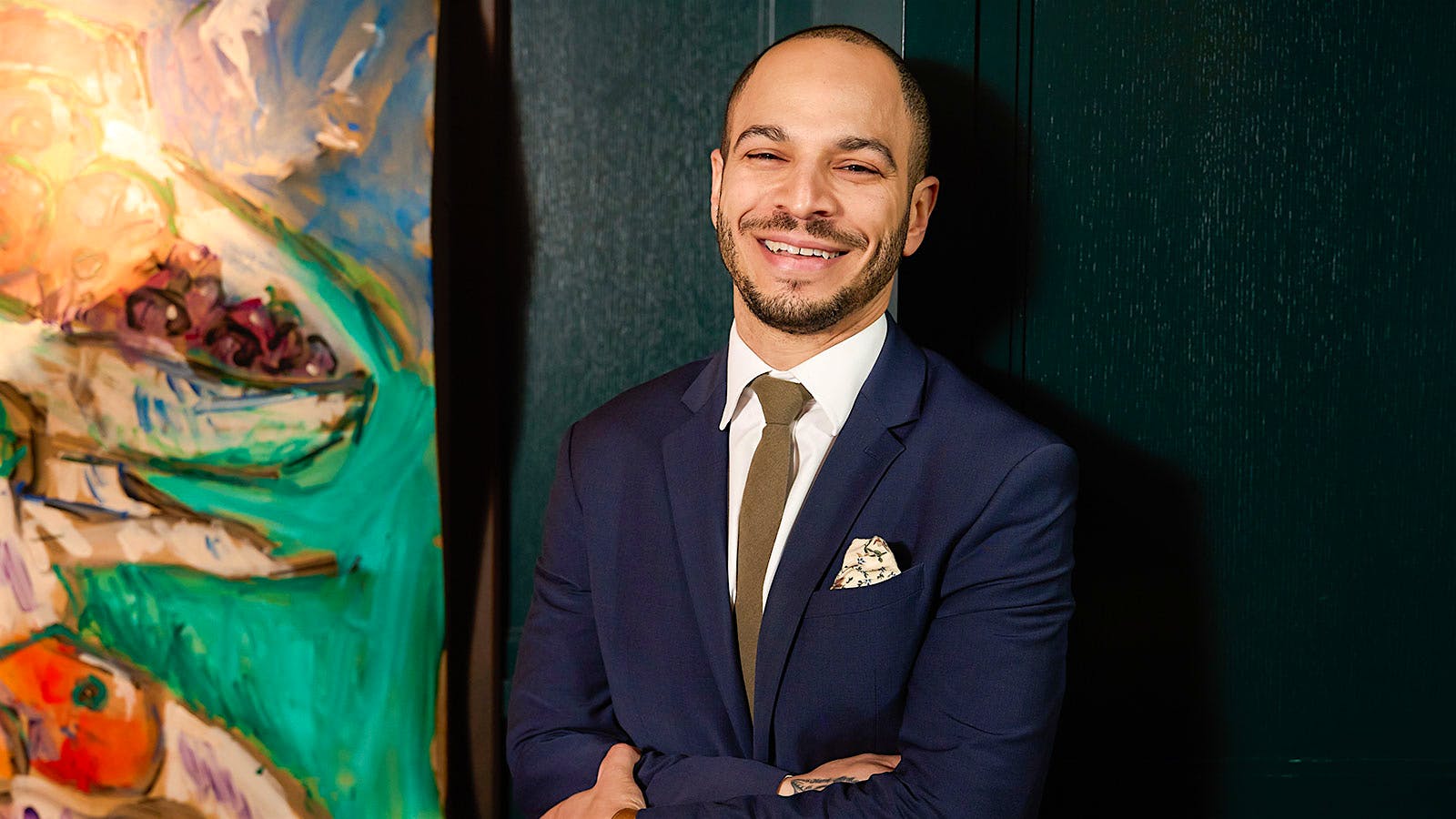


Last year, Danny Meyer’s Union Square Hospitality Group (USHG) named Vincent Morrow the restaurant empire’s new wine and beverage director. Overseeing some of New York City’s finest wine cellars—including Grand Award winner The Modern and Best of Award of Excellence winners Gramercy Tavern, Union Square Cafe, Ci Siamo and Manhatta, as well as newly renovated The View in Times Square, among others—Morrow has a unique window into the drinking culture of the world’s greatest wine city.
Morrow is a master sommelier whose résumé includes stints at The French Laundry and Press in Napa (which boasts the largest collection of Napa Valley wines in the world) and Gary Danko in San Francisco. The Phoenix native landed a soccer scholarship at Sonoma State University, where his proximity to wine country led to his eventual professional pivot into the hospitality and wine worlds. An avid surfer, Morrow thought he’d spend the rest of his life in the Golden State, until USHG—which celebrated its 40th anniversary last year—came knocking.
Managing beverage programs that collectively offer more than 10,000 wines, Morrow is seemingly everywhere at once, spending his days and nights hopscotching between USHG restaurants throughout Manhattan and fine-tuning wine lists by adding exciting new producers and rare older vintages. Recently, he’s been making side trips to Boston, where a second Ci Siamo location is opening later in 2026.
Morrow spoke with senior editor Kristen Bieler about the best—and worst—deals on wine lists, how USHG manages to sell more wine in a declining market, what bottles are in his cellar and more.
Danny Meyer is famous for hospitality—he literally wrote the book on it (Setting the Table, 2008). What is the USHG secret sauce?
Hospitality starts with our own people. When our team feels taken care of, respected and valued, they will do the same for the guests who come through the door. Guests can feel that warmth and generosity. That’s the true difference, I believe.
What’s a bottle of wine that changed your life?
One Thanksgiving when I had just turned 19, I tried a glass of red wine that my mom bought at one of the local wineries in Sonoma, where I was going to school. It was the second time I’d ever tasted wine and I thought, ‘OK, that’s pretty good!’ and I didn’t spit it out. Before that I thought wine was disgusting. That glass was a mental shift, and I felt like I was becoming an adult.
How do West Coast wine drinkers compare to East Coast wine drinkers?
New York is really one of the first gateways for wine coming from across the pond. Trending producers may take a year or two before they hit the West Coast, if they ever do. There’s just a sheer amount of wine that doesn’t even exist in California.
I find that New York drinkers spend big on blue-chip wines from Europe. But a lot of tourists who come to NYC want to drink American wines, so we sell more Oregon, Washington, California and New York wine than you might think. In California, people visiting San Francisco and wine country want to drink local wines from the area. But the locals? They want to drink wines from outside of California, too.
What are your top California wine recommendations for fans of European wines?
For Burgundy (Pinot Noir) lovers, I recommend RAEN, Littorai, Ceritas and old Calera. And for Cabernet drinkers, I suggest Corison, Togni, Dominus, Mayacamas, Laurel Glen and Matthiasson.
What are the best Bordeaux bottles for wine lovers who regularly drink Napa Valley Cabernet?
At the entry tier, Quinault l’Enclos. Of course, Château Pavie and Château Léoville Poyferré if you have the budget. But more than a single producer, I would direct them first to recent, warm vintages—2018, 2019, 2020 and 2022—and then find a producer and price point to match.

What’s the best wine question a guest ever asked you?
I love it when a guest genuinely asks: ‘What would you drink?’ Particularly when you’ve built a rapport, this has often led to some great bottles. Sometimes it ends up leading to an icon, blue-chip wine we all dream of trying, but just as often—and just as much fun—it leads to a debate about which Etna Rosso to drink, or simply to pulling a cork on a less-traveled region on the list.
What trends are you seeing in wine drinker behavior?
People are willing to spend much more on a glass of wine today. They may be drinking less, so they don’t order an entire bottle, but they are very open to treating themselves to a special glass that they savor.
Wine pairings are really popular. I’ve seen a shift over the last two or three years to guests opting for pairings with their meal at our restaurants that offer it. I think people are looking for more experience for their money, and getting a different glass at every course feels like augmenting the service and education.
And Thursday lunch is the new Friday lunch.
Do you think the nonalcoholic trend is here to stay?
Yes, the nonalcoholic trend is very real. Guests are looking to limit alcohol consumption, but they also want something beyond water or soda. We’re leaning into it by increasing our offerings of NA cocktails, wines and spirits—all of it.
What’s the USHG restaurant that sells the most wine—in dollars and in volume?
Gramercy Tavern sells the most in value. But for sheer number of bottles, it is likely Ci Siamo. It’s the domino effect of coming in and seeing wine on many tables—it sets a tone, and people want to partake.
Wine consumption is famously declining—but USHG wine sales are up. Why is that?
We are a wine-driven organization: At many of our restaurants we have anywhere from four to seven sommeliers. The focus is effective and proves that wine is alive and well, certainly in New York.
Just as important: We focus on value. We really believe it’s a key ingredient to keeping guests engaged in wine through tough times—and particularly for attracting the next generation of drinkers. Everything around us continues to get more expensive, including wine. We’re actively working to restructure how we price our lists and continue to relentlessly search for wines that provide great value.
What’s the best value wine region?
Etna is my crown jewel. I buy them whenever I find a new producer I haven’t tried—they are affordable enough to take a chance on. A few favorites are Girolamo Russo, Eduardo Acosta and Terre Nere, of course.
I also love Chardonnay and Pinot Noir from Argentina, particularly the Bodega Chacra wines. Even though they are starting to get pricier, they provide good value at the entry level.
What’s the worst deal on a restaurant wine list?
Pound for pound: Burgundy. I love the region, but it’s become a section of the list that I will only briefly skim through to see if there are any deals hiding. There are so many other great Chardonnays and Pinot Noirs of equal quality around the world.
Are there any deals in Burgundy?
In the Mâcon, the whites of Verget offer a lot of wine for the money. We buy everything we can get and they are on the by-the-glass lists at Manhatta, Gramercy Tavern, Union Square Cafe and The Modern.
What’s the most expensive wine on any of your lists right now?
At Manhatta we have the 1961 Château Latour for $22,000.
What’s a wine worth the splurge?
For me? Château Rayas. It’s gotten incredibly expensive, but my wife and I splurged on the 1996 as our West Coast parting gift to ourselves—and it was sensational. What do I advise my guests? Whichever wine you are excited about and feel comfortable splurging on. Champagne feels right more times than not.
What’s your most exciting wine discovery of the past year?
I will limit myself to two. First, Marco Pezzutto in Piedmont. Marco worked in some great cellars around Piedmont, briefly left winemaking to pursue beekeeping, and now combines his Arneis and Nebbiolo from select parcels—and 2023 was his first vintage to hit the U.S. The wines are sensational.
And Jintaro Yura from Alsace. Jintaro was a sommelier in Japan, and his Riesling and Pinot Noir are outstanding.
What are the best wines for hard-to-pair springtime ingredients like asparagus and artichokes?
Most wine professionals would recommend herbaceous whites such as Sauvignon Blanc and Grüner Veltliner—and I’m also in favor of those. I also recommend aromatic grape varieties; there is something to floral notes interacting with fresh herbs and green vegetables that I quite enjoy. Dry Riesling, Albariño and Muscat come to mind. Vermentino from Italy is great if you want more texture and body.
What bottles might we find in your home wine fridge this spring?
My wife, who is also a sommelier, and I typically gravitate toward whites and light reds that are affordable enough to buy multiple bottles of—no more than $30–$35 per bottle.
We buy a lot of entry-level Austrian Grüner Veltliners from Nigl, Rudi Pichler, FX Pichler and Brundlmayer, as well as entry-level German Rieslings from Ludes, Lauer, Clemens-Busch. There is usually Garnacha from Madrid hanging around—namely Commando G, Bernabeleva or Granito del Cadalso. Bloodroot Pinot Noir from Sonoma is another favorite. And G.B. Burlotto is an insanely good value from Piedmont.
Keep up with the latest restaurant news from our award winners: Subscribe to our free Private Guide to Dining newsletter!