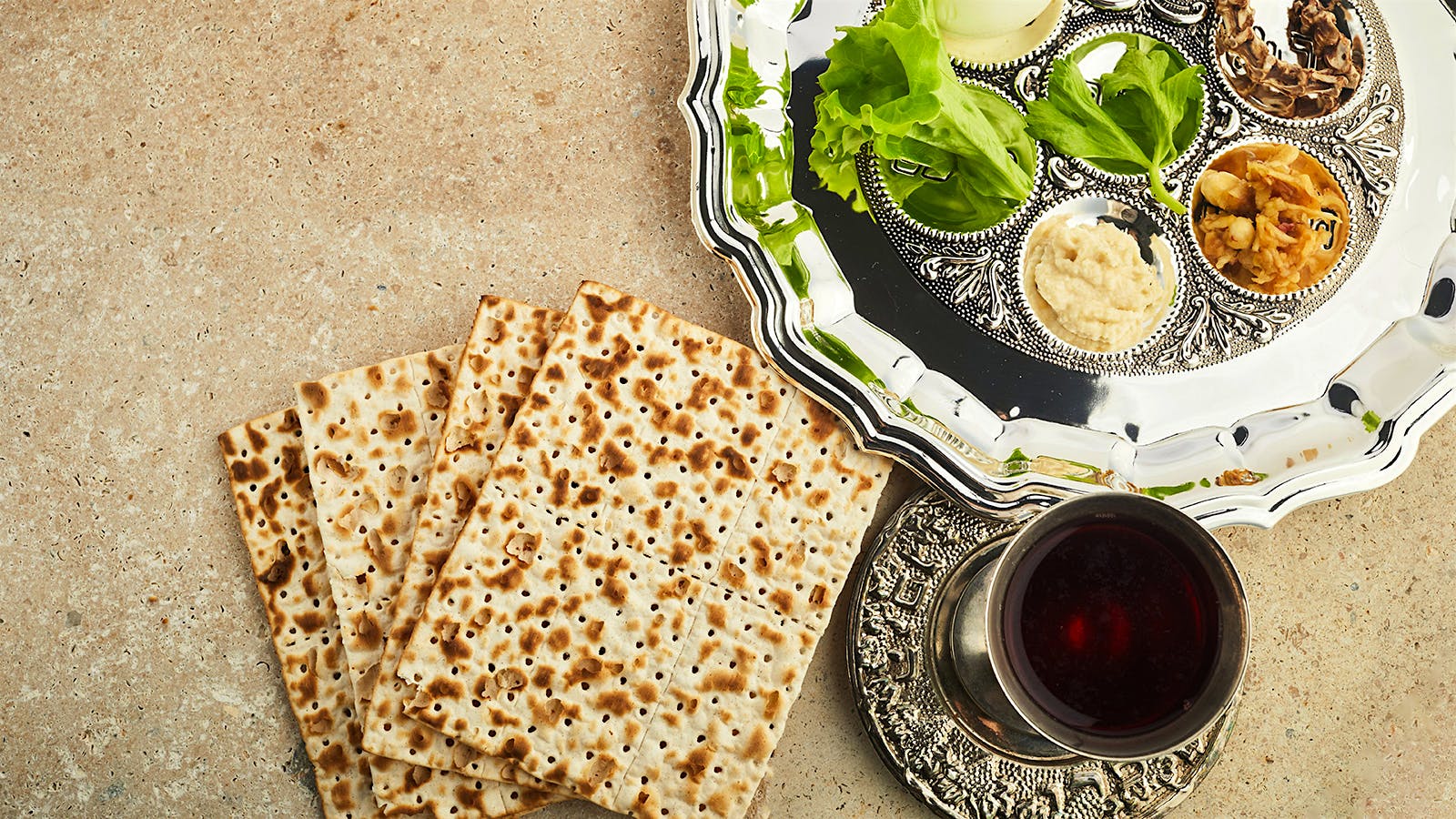


In Jewish tradition, wine is a big deal. Perhaps nothing demonstrates this as clearly as the Passover Seder, the annual gathering where families and friends sit down for a meal to celebrate the exodus from slavery in Egypt. The Seder instructs attendees to drink not one, but four glasses over the course of the evening. And that’s just during the prayers before and after the meal. You’re welcome to have more while you eat.
But aside from the religious importance of wine, which Jews believe is a gift from God designed to bring joy, the wine at Seder is also a challenge. What should you serve? What kind of wine is suitable for such an occasion? Should it be kosher? Should it come from an Israeli winery? And what kind of wine is going to satisfy everyone and pair well with matzah, bitter herbs, matzah ball soup and whatever else you’re serving? To tackle some of these questions, I’ve asked my fellow member of the tribe, social media manager Rachel Shanker, to join me in a discussion.
First off, Rachel, how do you celebrate Passover, aka Pesach?
Rachel Shanker: Passover has always been my favorite holiday. I love celebrating the start of spring, the joy of bringing in a new season and a fresh start. My birthday often falls within the week, which has its upsides (spending time with family) and downsides (no birthday cake).
My family sits around a big table. Each person gets their own individual version of the Seder plate, and we tell the story of Passover. We sing songs. Our Seder usually lasts around 30 minutes; it’s not one of those four-hour situations.
My favorite part is the food. My family always has pickle platters on the table, which my cousin and I tend to destroy before dinner has even started. My mom makes the best matzah ball soup, which I’m sure everyone says about their mother. I’ve never been able to get behind the gefilte fish … apologies to my ancestors.
While the Seder is about tradition, the main course changes every year at our house. Sometimes it’s brisket, sometimes chicken, sometimes salmon. Apparently this year, it’s all three! This keeps wine pairing interesting, as you can imagine.
What’s on your table every year, Mitch, and how do you manage wine pairing for your Seder?
Mitch Frank: I think you captured the key joy of Passover—family, or friends who feel like family. And then there’s the idea that Jews around the world are sharing the same experience.
For many years, Passover for me meant gathering with my wife’s relatives in Washington, D.C. Her grandfather lived past 100, and family members would travel in from around the country. When I started going, my wife and I were college kids dating. In later years, her grandfather got to watch my older son, his first great-grandchild, read the four questions. Now that he has passed, we gather at my in-laws’ house in New Orleans each year. Often my parents fly in and join us.
The challenge of Passover wine is similar to that of Thanksgiving—you’re pairing the wine with a crazy array of foods. We start with matzah, charoset and (for me) a generous dollop of horseradish. Then matzah ball soup. I happen to like, in a weird sort of way, gefilte fish. It’s the hot dog of seafood, after all. Then we have brisket and a wide array of sides. We finish with a fantastic flourless chocolate cake my wife makes.
The wine also needs to stand on its own during the portion of the Seder before the meal. Personally, I have long pushed the idea of starting with a white wine through prayers and the first course—something complex, like a Vermentino from Tuscany, a Gewürztraminer from Austria or a Sicilian Carricante. Or why can’t we have some bubbly to begin?
But most people expect red. After all, many a Jewish child’s first taste of wine was Seder Manischewitz. So I opt for a flexible red, such as a Côtes du Rhône or a Sonoma Pinot Noir. Some richness, some vibrance and a lot of flavor.
What’s your wine play? And here’s a question worthy of Rabbi Akiva—should the wine be kosher?
RS: I think your connection to Thanksgiving is a very apt comparison. Both are large meals, with several courses, and both involve friends and family with differing palates. It’s funny that you mention wanting to start with white for the early portions of the evening, like the Seder and soup, before switching to red for the dinner portion. I completely agree!
There does seem to be this expectation that red wine should be served, and while the Seder specifies four glasses of wine, it certainly doesn’t specify the color of that wine. I imagine this comes from the tradition of drinking Manischewitz, a traditional kosher wine made from the Concord grape in New York. In fact, my Bubbie still prefers to drink Manischewitz over the nice wines I’ve chosen, which hurts a little bit—haha.
Using the structure of the four glasses, I’ve always wanted to throw tradition out the window and break it down by sparkling, followed by white, rosé and then finally red. Why not? At the beginning of the night we’re snacking on matzah (a dry, cracker-like “bread”), hard-boiled eggs and charoset, so I’d love to start with a demi-sec Champagne or even a sparkling Riesling. I think a touch of sugar would be great with your piled-high horseradish sandwich, too. With the matzah ball soup and gefilte fish, I agree that a white wine with some body is the right move—perhaps a Pinot Blanc or an unoaked Chardonnay.
And while it’s certainly not the most traditional, since a main theme of Passover is celebrating the start of spring, what better way to celebrate than with rosé?! I think rosé is such a fun choice that really leans into the joy of springtime. For reds, I often go in the same direction as you: Rhône or Pinot Noir are flexible enough to match with everything from brisket to roast chicken, and they tend to please a variety of palates.
My mom also makes a killer flourless chocolate cake, so perhaps a little LBV Port if you’re feeling brave enough for a fifth glass ...
And now for the golden question: In my house, no, the wine does not need to be kosher. But this is all very personal. Each home observes kosher laws differently, so if you’re going to someone’s house for Passover and want to bring the host a bottle of wine, it’s always best to ask first.
Here's another question: On Passover, should you drink Israeli wine?
MF: On the question of kosher, I happen to belong to the branch of Judaism known as Southern Reform, which means I eat shellfish and andouille sausage, just not inside the temple. But I agree that keeping kosher is a personal matter and people should do what feels right. I have the same feeling about choosing Israeli wine. For some people, it only makes sense that a holiday celebrating our exodus from Egypt to Israel should include Israeli wine.
But as a proud diaspora Jew, I love that there are Jews throughout the world who have shaped cultures wherever they happen to live. And so I am happy to drink wine from throughout the world.
Again, the beauty of Passover, whether you’re doing a four-hour Seder or 30 minutes reading from a kid’s Haggadah before dinner, is loved ones joining together to celebrate life and freedom—and to hope that next year, everyone in the world can live free. And what better way to enjoy that than a glass, or four, of wine.