
St. Supéry announced today that it has expanded its portfolio with the acquisition of Oakville’s Rudd Estate and Crossroads brand. The purchase gives Chanel its second property in Napa Valley, joining St. Supéry Estate Vineyards and Winery in Rutherford. The purchase includes the brand, inventory and property, including 65 acres total, 47 planted to grapevines. The price was not disclosed.
“We had been searching for exceptional vineyards since 2015,” St. Supéry CEO Emma Swain told Wine Spectator. “We’ve looked at a lot of vineyards and a lot of opportunities and we felt like this was an excellent fit for our portfolio, and for the wines.”
It’s unclear why Rudd decided to sell, but the move benefits St. Supéry and its parent company, Chanel. Both Napa wineries are focused on estate-grown grapes, produce high-quality wines and share similar values around sustainability and hospitality. Rudd strengthens the portfolio with key vineyards and wines from Oakville, one of Napa’s most sought-after sub-appellations; their estate vineyards are planted exclusively to red Bordeaux varieties. Meanwhile, St. Supéry will continue producing Sauvignon Blanc and red wines from its Dollarhide vineyard and Rutherford parcels.
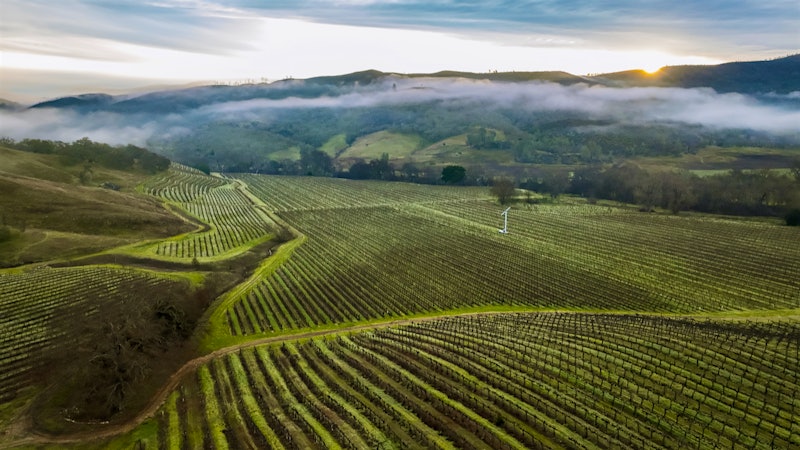
Third-generation French vintner Robert Skalli founded St. Supéry in 1982. All of their wines are made from their own Napa Valley vineyards. With the purchase, they now own more than 1,650 acres of land, 600 of those acres planted to vines, on four distinct parcels: the Dollarhide Estate Vineyard in northeastern Napa Valley, their two Rutherford Estate Vineyards and now the Rudd Estate in Oakville.
Luxury goods empire Chanel Group has owned St. Supéry since 2015. Beyond Napa, the company owns three Bordeaux estates—Château Berliquet, Château Canon and Château Rauzan-Ségla—as well as Domaine de l'Ile on the island of Porquerolles in Provence. Its wine holdings also include Bordeaux négociant Ulysse Cazabonne and European retailer Lavinia.
![St. Supéry CEO Emma Swain.]](https://mshanken.imgix.net/wso/bolt/2026-04/iglive_swain040721_1600.jpg?auto=compress,format,&sharp=5&vib=20&q=70&w=320 320w,https://mshanken.imgix.net/wso/bolt/2026-04/iglive_swain040721_1600.jpg?auto=compress,format,&sharp=5&vib=20&q=70&w=320 640w,https://mshanken.imgix.net/wso/bolt/2026-04/iglive_swain040721_1600.jpg?auto=compress,format,&sharp=5&vib=20&q=70&w=384 768w,https://mshanken.imgix.net/wso/bolt/2026-04/iglive_swain040721_1600.jpg?auto=compress,format,&sharp=5&vib=20&q=70&w=828 828w)
Chanel operates as a privately owned luxury company headquartered in London. The Wertheimer family owns the business, which Gabrielle “Coco” Chanel founded in 1910 when she opened her first fashion house in Paris. Today, the company is best known for high-end fashion, fragrance, makeup, skincare, jewelry and watches.
Food and wine entrepreneur Leslie Rudd founded Rudd Estate after purchasing Napa’s Girard winery in 1996. He transformed it into Rudd Oakville Estate, known for outstanding estate grown Cabernet Sauvignons. That same year, he acquired a majority stake in specialty grocer Dean & DeLuca. Over time, he built a broad portfolio that included Oakville Grocery, Press Restaurant, Edge Hill Estate, Covenant Wines and Distillery No. 209.
His daughter Samantha Rudd assumed leadership of the winery in 2016. She has spoken candidly about the challenges of earning her father’s trust and proving her commitment to the business. Before his death in 2018, Leslie Rudd required her to meet financial benchmarks within five years to retain ownership. She exceeded those goals in less than two years. "This business was hard for him to let go of. It's the only thing he put his name on," she told Wine Spectator in 2019.
To sharpen the winery’s focus, Samantha sold interests in Oakville Grocery and Distillery No. 209. In 2022, she also sold the 27-acre Edge Hill estate to Joel and Sarah Gott (it was acquired by Napa vintner Hayes Drumwright earlier this year).
Under her leadership, Rudd Estate adopted organic and biodynamic farming practices and reintroduced its second label, Crossroads. She also launched the Unlikely Collaborators program, bringing together creatives from geologists to chefs, musicians and perfumers to collaborate at the estate. Rudd produces about 6,000 cases of wine annually.
![Samantha Rudd in an Oakville vineyard.]](https://mshanken.imgix.net/wso/bolt/2026-04/ns_rudd-deal-samantha-vineyard-041326_1600.jpg?auto=compress,format,&sharp=5&vib=20&q=70&w=320 320w,https://mshanken.imgix.net/wso/bolt/2026-04/ns_rudd-deal-samantha-vineyard-041326_1600.jpg?auto=compress,format,&sharp=5&vib=20&q=70&w=320 640w,https://mshanken.imgix.net/wso/bolt/2026-04/ns_rudd-deal-samantha-vineyard-041326_1600.jpg?auto=compress,format,&sharp=5&vib=20&q=70&w=384 768w,https://mshanken.imgix.net/wso/bolt/2026-04/ns_rudd-deal-samantha-vineyard-041326_1600.jpg?auto=compress,format,&sharp=5&vib=20&q=70&w=828 828w)
Samantha continues to operate Press Restaurant, a Wine Spectator Grand Award winner, as well as Under-Study, a culinary marketplace and café that opened next door in 2025, along with chef/partner Philip Tessier.
The plans are to continue to operate Rudd and Crossroads as their own brands, and continue the work that the Rudds have done. Winemaker Natalie Bath and managing director Oscar Henquet will stay on board.
“It’s interesting to me how many Napa brands are going outside of Napa to grow,” said Swain. “We’re doubling down on Napa, it’s such a special place. There’s a reason we grow great wines here.”
Stay on top of important wine stories with Wine Spectator’s free Breaking News Alerts.