

It’s no mystery that wine has been an integral part of human culture for thousands of years. The earliest known evidence of winemaking was found near Tbilisi, Georgia, from around 6000 B.C.E. It’s mentioned throughout the Bible, as well as in records from ancient Egypt and the Roman Empire.
But the details of winemaking itself have always been a bit fuzzy. The stuff we drink today couldn’t possibly be the same as what they were drinking back then. Or could it? A recent article published in the scientific journal Nature Communications shed some new light on the advanced techniques used by ancient humans to grow grapes. They also learned more about how grape varieties have evolved with humanity and how one grape in particular hasn’t changed much over the past 600 years.
From Gatherers to Farmers
The journal assessed the DNA from 49 archeological grape seeds, or pips, found within present-day France, dating from the Bronze Age (2300 B.C.E. to C.E. 150) to the Medieval Period, a duration of nearly 4,000 years. According to the study, humans have been domesticating grapes for wine in the south of France since the year 650 B.C.E. Until now, experts believed that people were simply harvesting the grapes that were indigenous to their land, but the new study brings an exciting discovery: genetically identical grape varieties between St.-Maximin and Marseille, a distance of about 25 miles.
This suggests that around 500 B.C.E., ancient winemakers in what is now France had switched from simply domesticating local grapes to intentionally propagating them, or taking cuttings from other plants and replanting them to start new vines. The first vignerons! According to the study, this is “the earliest direct evidence of vegetative material and viticultural knowledge exchanged between coastal trade hubs and rural inland sites.”
By the Roman period, a pip from northeastern France was genetically identical to two pips from the south of France, over 350 miles away. This discovery of identical clones and closely related individuals between sites and centuries highlights the early adoption of widespread propagation. According to Carole Meredith, professor emeritus of Viticulture and Enology at University of California, Davis, propagation, “in its simplest sense, means to make more plants from an original plant, whether by the use of seeds or by cuttings.”
![A painting of winemakers.]](https://mshanken.imgix.net/wso/bolt/2026-04/ns_ancient-grapes-vintners-040226_1600.jpg?auto=compress,format,&sharp=5&vib=20&q=70&w=320 320w,https://mshanken.imgix.net/wso/bolt/2026-04/ns_ancient-grapes-vintners-040226_1600.jpg?auto=compress,format,&sharp=5&vib=20&q=70&w=320 640w,https://mshanken.imgix.net/wso/bolt/2026-04/ns_ancient-grapes-vintners-040226_1600.jpg?auto=compress,format,&sharp=5&vib=20&q=70&w=384 768w,https://mshanken.imgix.net/wso/bolt/2026-04/ns_ancient-grapes-vintners-040226_1600.jpg?auto=compress,format,&sharp=5&vib=20&q=70&w=828 828w)
DNA tests have found that certain grape varieties cultivated in the ancient Middle East spread to Europe in early centuries, mixing with local varieties to produce many of the wine grapes we love today. It appears that once the locals in France found grapes they liked, they propagated them.
In the case of vegetal propagation, or the use of cuttings, “the identities of desirable grapevine varieties have been perpetuated over time, sometimes for centuries.” As Meredith explains, while seed propagation can’t produce a copy of a parent plant, vegetal propagation does. While nowadays propagation is the law of the land and is how many vineyards maintain consistency, avoid disease and rot and develop individual style, it was unclear when this technique originated.
An Old Favorite
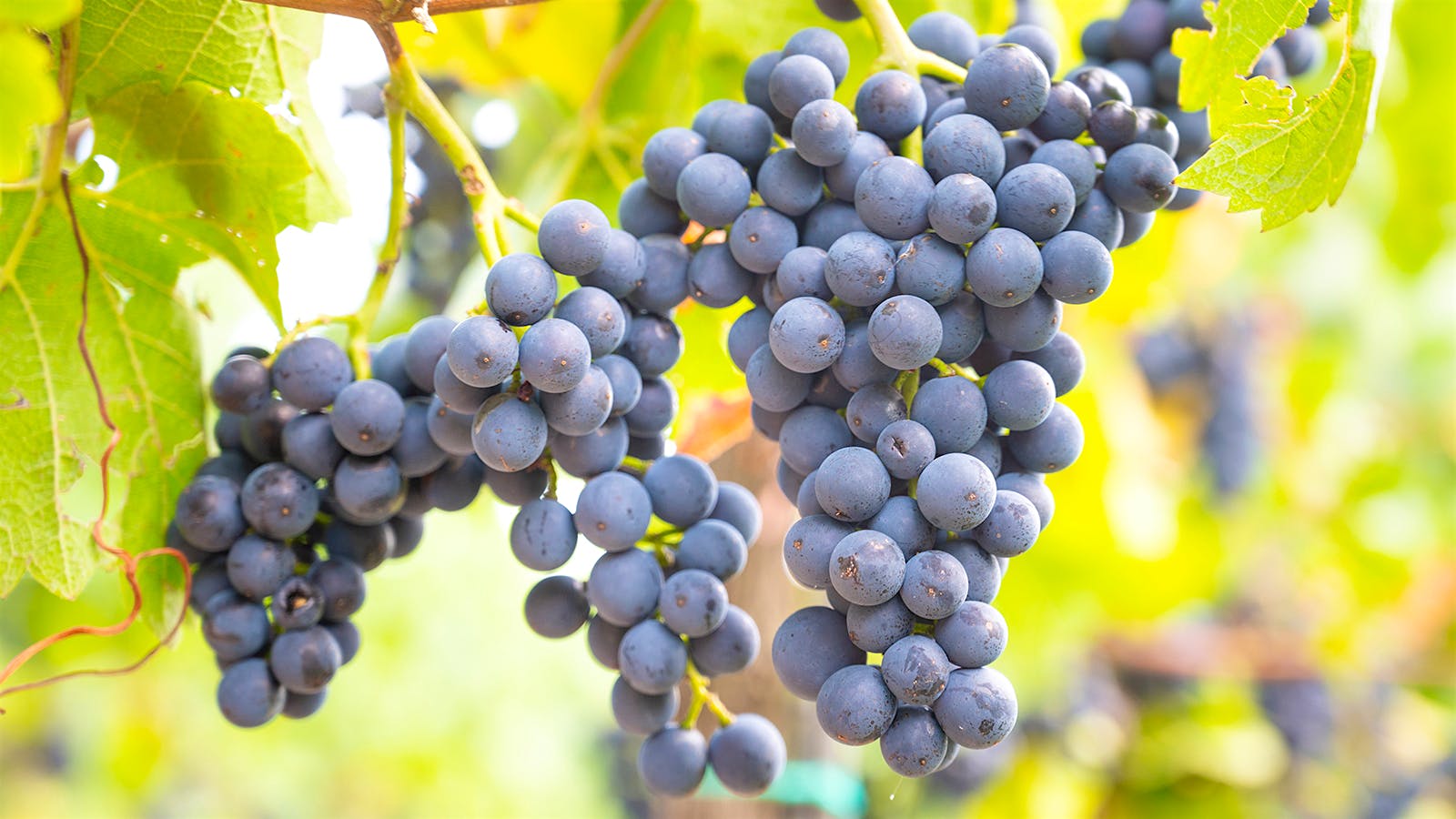
And this is when things get really juicy: The study goes on to reveal that from the Iron Age on, certain lineages persisted for centuries, and two Medieval grape varieties have genetically identical matches to modern-day varieties. One is an indigenous Portuguese variety called Folha de Figueira. The other is Pinot Noir.
Yes, the Pinot Noir we drink today is a clone of Pinot Noir from at least 1400–1500 C.E., the same century when Joan of Arc lived. “Pinot Noir already existed in its current form nearly 600 years ago and had already spread beyond its probable birthplace in Burgundy,” says Laurent Bouby, a researcher at the Institut des Sciences de l'Évolution de Montpellier and corresponding author of the study. “This confirms that [Pinot Noir] was already regarded as an elite cultivar by Medieval winemakers, and that this interest has never waned, ensuring its survival through the centuries.”
So was Joan of Arc drinking the same Pinot we drink today? It’s hard to say. Certainly winemaking techniques have advanced drastically over the past 600 years and the “very tiny separate DNA fragments” of a seed ultimately can’t reveal much about the complex flavors and properties of a wine.
What these findings do reveal, however, write the authors, is “viticultural traditions heavily relying on clonal reproduction to ensure inheritance of desirable traits across generations and geographies,” a winemaking technique that is still utilized today. Ultimately, for Bouby, these findings are “a powerful tool for exploring the intimate relationships between human societies, through the spread of grape varieties. We see the importance of both long-distance exchanges and local adaptations in shaping the emergence of great vineyards.”
To this day, wine is still best enjoyed when shared with others, and 600 years ago they had the same idea. Whether these long-ago winemakers were sharing vines or sharing a glass, they recognized the importance of spreading the wealth.
At the end of the day for Bouby—who lives in the Languedoc and says he enjoys drinking the strong red wines of the Mediterranean, the coppery white wines of Georgia and, of course, the fine Pinot wines—it’s amazing to think that our Medieval ancestors might have enjoyed a similar taste. And maybe 600 years from now, future generations will be raising a glass of Pinot Noir to us, as well.
Stay on top of important wine stories with Wine Spectator’s free Breaking News Alerts.