

This article was originally published on Mar. 11th, 2026. It appears in the June 15-30, 2026, issue as “U.S. Supreme Court Considering New Wine Case.”
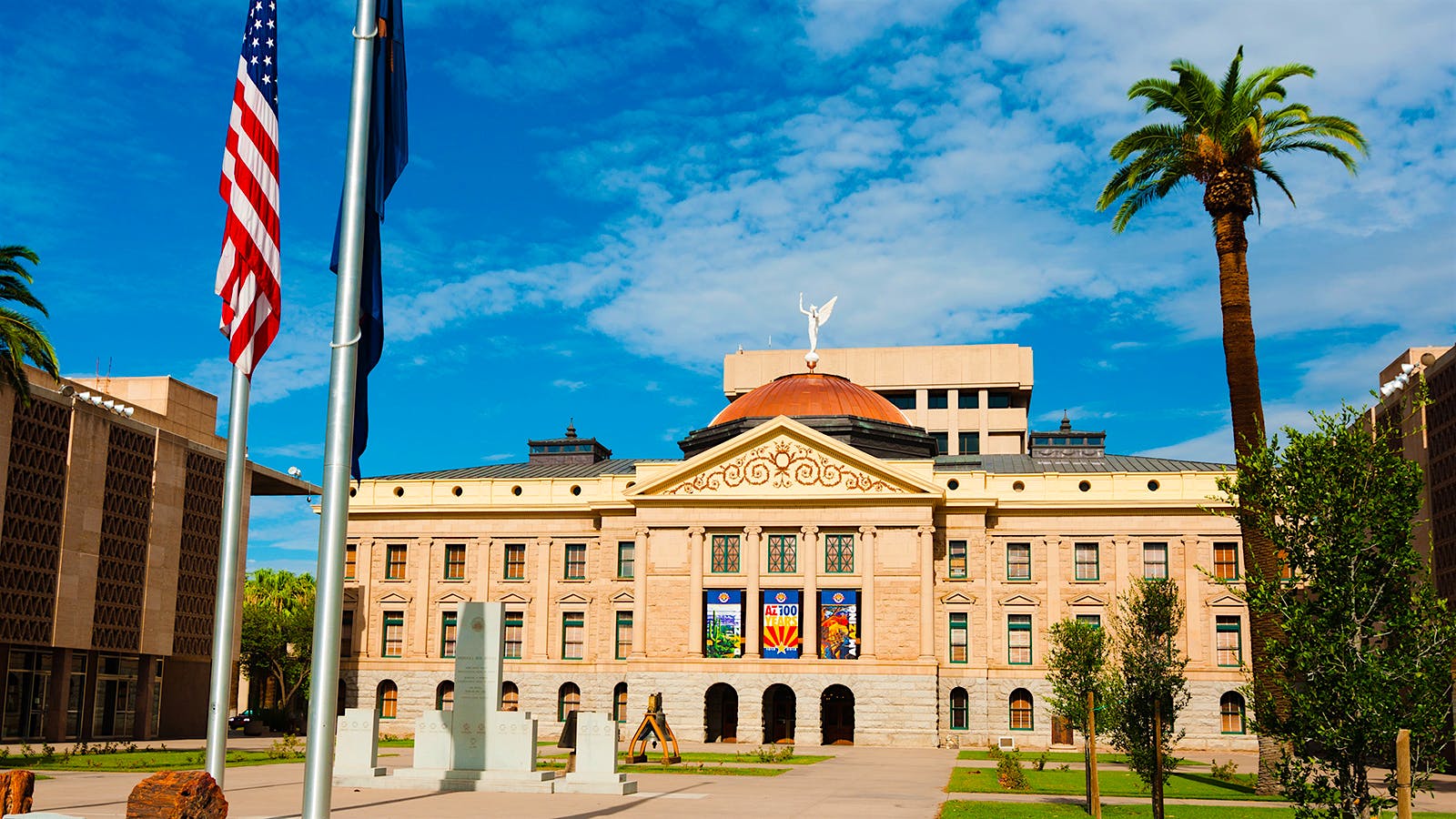
The topic of wine could be back before the U.S. Supreme Court in coming months. The justices are weighing a petition to hear a case challenging state laws that ban Arizona residents from ordering wine from out-of-state retailers.
The petition comes after several years of legal challenges to similar laws in multiple states and conflicting rulings by federal appellate judges. If the justices agree to hear the case, it could potentially change the way wine and other alcoholic beverages are sold across the nation.
Plaintiffs in Arizona have petitioned the Supreme Court to review a decision by the Ninth Circuit Court of Appeals that upheld a state law requiring an out-of-state wine retailer to maintain a physical presence in the state.
Arizona state officials are the defendants in the case, Day v. Henry. Like officials in the 37 other states with similar bans, Arizona’s argue that this requirement is necessary to maintain the three-tier system of producers, wholesalers and retailers that officials use to maintain control of alcohol sales for public safety reasons.
It’s an argument long opposed by those challenging the laws.
“All the stuff coming from another state is going through their three-tier system, so I don’t think it undermines it at all,” said Sean O’Leary, an attorney who filed an amicus brief in the Arizona case on behalf of the National Association of Wine Retailers.
The overall effect is that this framework has made it more difficult for wine consumers to obtain certain wines. It’s a nuisance that fans of single variety chocolate or honey—or most other gourmet products—don’t suffer in an e-commerce age.
“You’re talking more about small specialty wineshops. Those places are usually carrying wine not available in the state system,” said Jarrett Dieterle, a legal policy fellow who filed an amicus brief in the Arizona case on behalf of both the Manhattan Institute and Reason Foundation, two organizations that advocate for free markets.
The majority of judges on the Ninth Circuit upheld Arizona’s law. Three other federal appeals courts have done the same in recent years. The problem, and the reason plaintiffs and their supporters have petitioned the Supreme Court for relief, is that the decision conflicts with rulings from two other appeals courts.
The Balance Between Protecting Health and Protectionism
The primary source of the disagreement are two words used in a Supreme Court decision six years ago, “essential feature.”
That case, Tennessee Wine & Spirits Retailers Association v. Thomas, and the 2005 Granholm v. Heald decision, form the basis of recent law over out-of-state alcohol sales and how to satisfy the conflict between the U.S. Constitution’s Commerce Clause, which prevents states from restricting interstate commerce, and Section 2 of the 21st Amendment, which gives states broad authority to regulate alcohol.
Both court decisions struck down state laws the justices said were protectionist in nature. In Granholm, the court decided states couldn’t bar direct sales by out-of-state wineries if they allowed those by in-state vintners. In Tennessee Wine, justices struck down a residency requirement that made it particularly onerous for transplants to Tennessee to obtain a liquor license. Justice Samuel Alito, writing for the majority in the latter case, said that “such a requirement is not an essential feature of a three-tiered scheme.”
Direct Retail Shipping Map

Since then, lower courts have tried to determine just what is, and what isn’t, an “essential feature” of state regulations that police alcohol sales. In his decision, Alito endorsed a two-point test to determine whether state laws were unnecessarily burdensome.
First, judges must determine whether the law is discriminatory. The majority in the Arizona case ruled that the demand for a physical presence in the state to sell alcohol is an “essential feature of Arizona’s three-tier system.” They said it applied equally to in-state and out-of-state businesses. Thus, it wasn’t discriminatory.
The second part of the test is what happens if judges determine that, yes, the law is discriminatory. Then they must answer whether that discrimination is allowed under the law because it advances the state’s obligation to maintain public health and safety.
In a separate case out of Indiana, federal judges in that jurisdiction actually split on the question of discrimination. One judge argued that the physical-presence requirement is “nondiscriminatory.” The other judge, however, disagreed. He zeroed in on how the wines were delivered, arguing that “licensed in-state retailers may self-deliver wine to Indiana consumers, so long as they use their own, separately permitted employees, but out-of-state retailers cannot.”
That judge ultimately sided with state interests because of the second prong in that test, about public safety: “The ability of law enforcement to conduct on-site inspections of retailers, in my view, distinguishes and justifies Indiana's physical-presence requirement.”
But while those two courts ultimately sided with supporters of the states’ regulatory scheme, judges in other jurisdictions have raised questions about whether a physical presence for out-of-state retailers is “essential” and therefore legally required.
Judges on the First Circuit bench argued that a Delaware law “cannot be given a judicial seal of approval premised either on the virtues of the three-tier systems generally or on the basis of a theoretical benefit to public health and safety associated with the challenged regulation.” That case was eventually decided in favor of state officials due to an issue over whether plaintiffs had standing to file the case.
But a Sixth Circuit appeals court remanded an Ohio case in part back to the district court for taking state claims at face value. It said that a proper reading of the Tennessee Wine test would not prevent challenges to other state laws and that judges must “consider Plaintiffs’ evidence in this case.”
What this all means is that while federal judges in some jurisdictions believe that the physical location requirement is legal because states say they need it, case closed, other judges say evidence is needed to support such regulations and that state claims cannot be given a prima facie wave of the hand.
“I think it’s raining in confusion right here,” said O’Leary.
We’re All Fine Here, How Are You?
Critics of the physical location mandate say the evidence to end the current system can be seen in the states where the direct sale of wine by out-of-state retailers is legal and safe, thanks in part to regulations involving permitting and tax collection.
“It’s worked really well,” said Dieterle. “No one in any of these cases has been able to document and demonstrate issues with out-of-state alcohol sales.”
The Wine and Spirits Wholesalers Association (WSWA), which has long opposed direct shipping, did not respond to request for comment.
Proponents admit they have a high wall to scale for the Supreme Court to grant a review. After all, only about 1% of petitions are granted. And previous requests for review by plaintiffs in similar cases have been denied.
“I do think that there is a puncher’s chance that they will,” said Dieterle. “Because I think there’s a strong argument to make that the lower courts have continued to aggressively narrow what I think the Court was trying to get into in Granholm and Tennessee Wine.”
But if the petition isn’t granted, or if it is and plaintiffs lose, supporters of ending the effective ban on out-of-state wine sales should remember a similar case out of Missouri. Federal judges there upheld the three-tier system and a requirement for a physical requirement as an "essential feature.”
But they also appeared to go out of their way to call the current system “economically and socially anachronistic,” suggesting that if the Supreme Court can’t grant the relief plaintiffs are seeking, there is a sentiment in parts of the country that change is needed. That would be a job for elected officials—and voters.
John Flowers is a Connecticut-based journalist who has written for CNN and the Wall Street Journal.
Stay on top of important wine stories with Wine Spectator’s free Breaking News Alerts.